Chapter XI · The Vessel Herself
Sailing Yankee
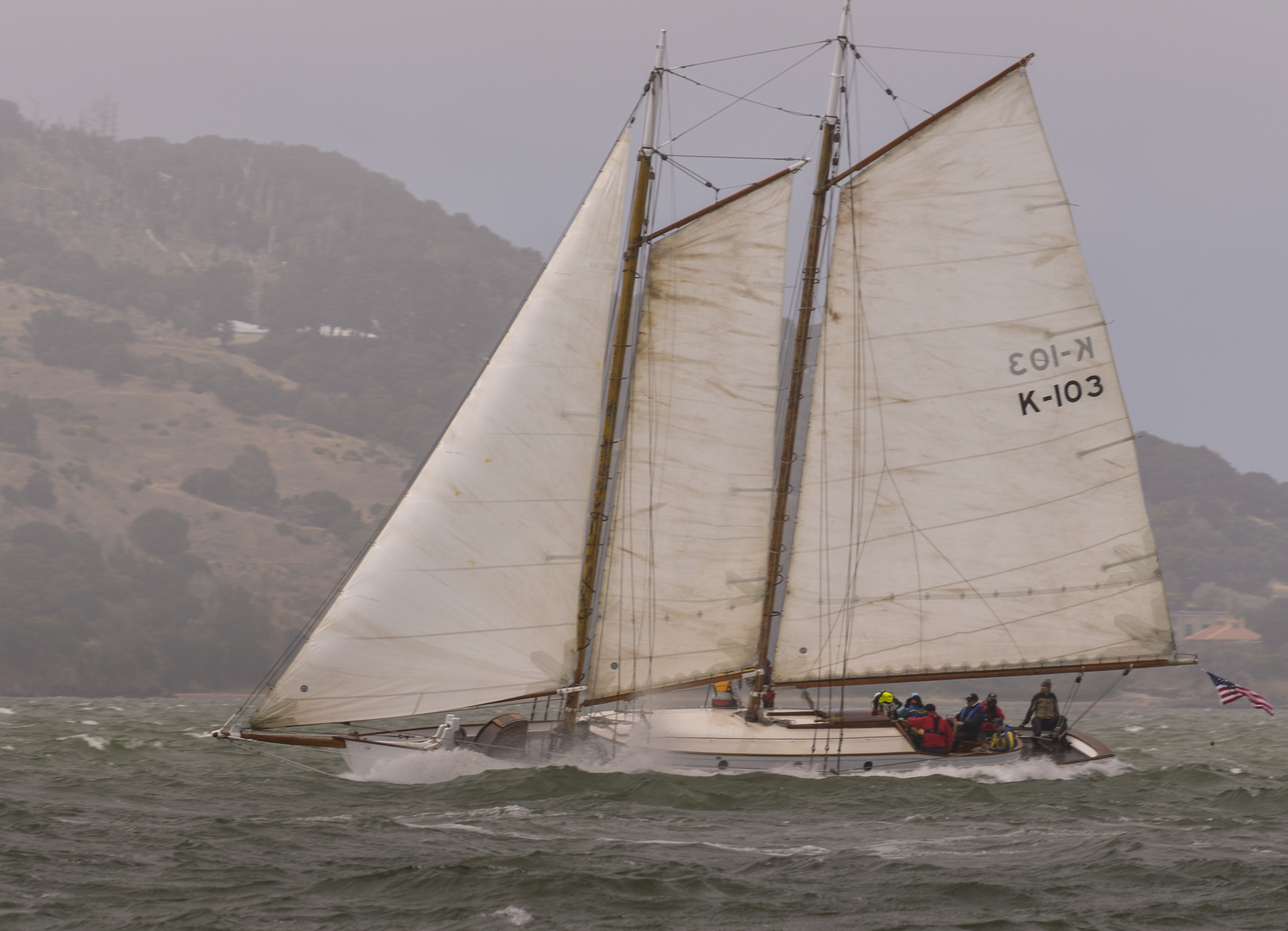
What it means to sail a big gaff schooner without mechanical assistance: 1,475 square feet of canvas and not a single winch.
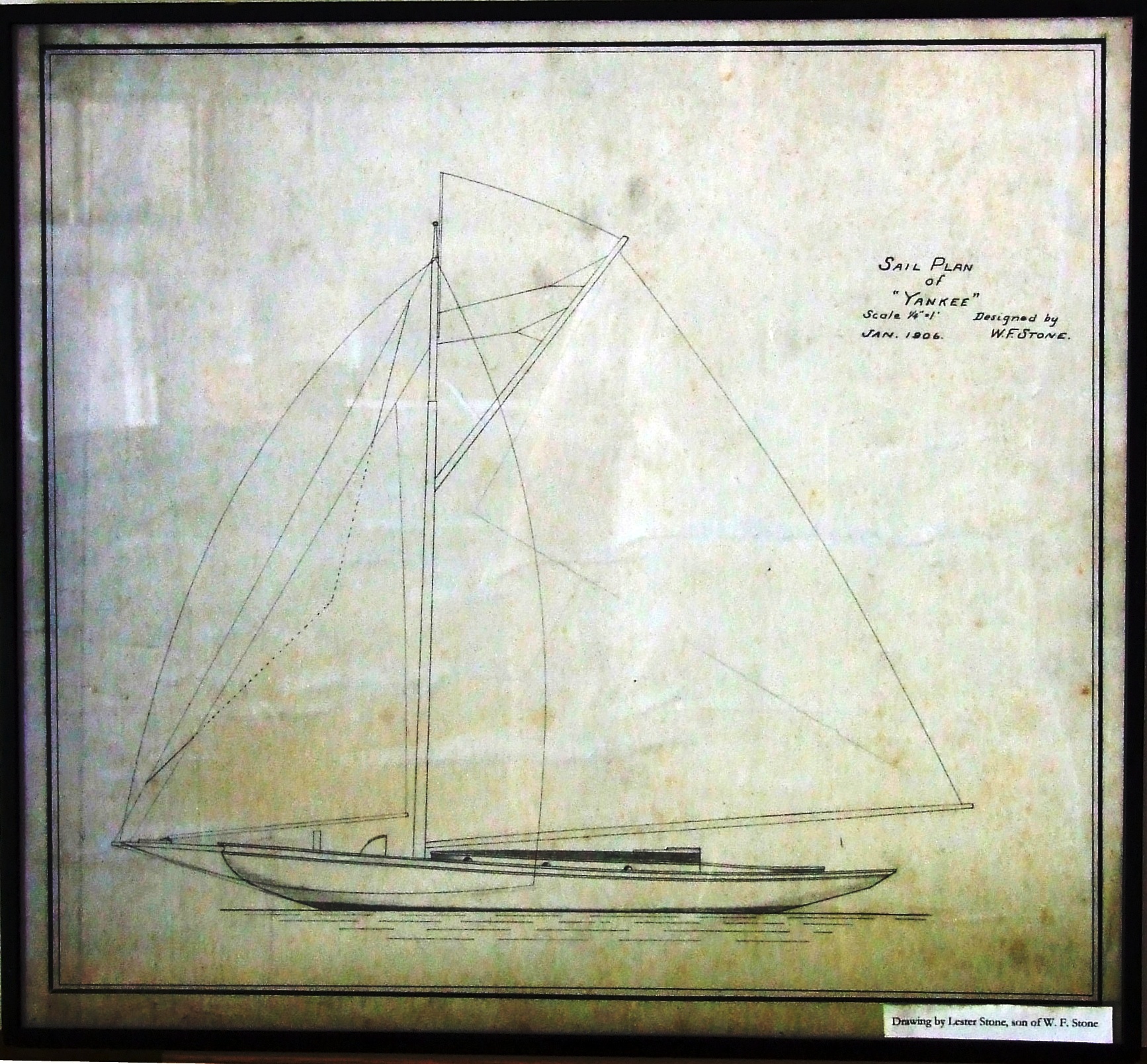
To understand Yankee’s character is to understand what it means to sail a big gaff schooner without mechanical assistance of any kind.
Her dimensions are: 52 feet 6 inches on deck, 62 feet 6 inches overall (including bowsprit), 36 feet on the waterline, with a beam of approximately 15 feet and a draft of 5 feet 10 inches. Her sail plan comprises a jib (395 square feet), a foresail (335 square feet), and a mainsail (745 square feet), for a total working sail area of 1,475 square feet. There are no winches. Every line is handled by the strength and coordination of the crew. As the Yankee hands like to say, she is sailed with “wenches, not winches.”
Sailing Yankee is a choreographed dance. When tacking or jibing, every crew member has a specific station and a specific job. The beefy fellow at the aft end of the cockpit grabs the mainsheet by the partners; his counterpart inside the cockpit works the cleat. The jib sheets run all the way back to the sides of the cockpit, tended by runners at the rail. Three crew on the housetop forward control the foresail, foregaff, and trimmer, and assist at midpoint with jib trim. Timing is everything: once Yankee is full and by, trimming becomes almost impossible in any sort of breeze, and the helmsman — who often sounds, as McNeill put it, like he’s calling a barn dance — must time his maneuvers to allow for the crew’s work pace.
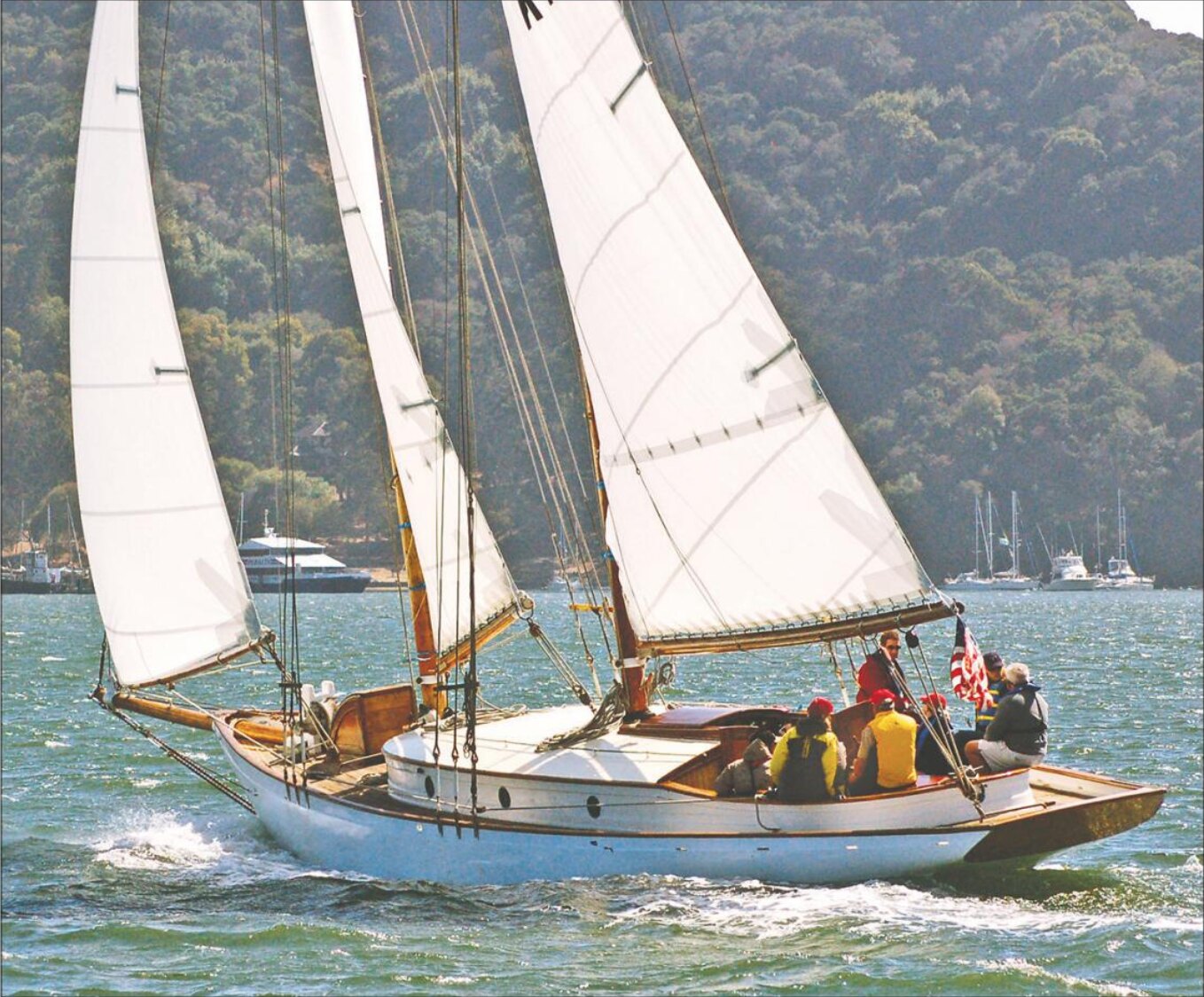
When she is heeled down hard in a blow, Yankee transforms. Her wide, heavy hull becomes long and slender, and she drives through the water with a power that has astonished crews for over a century. She will surf, too — and it will, as one skipper warned, scare you to death.
Below decks
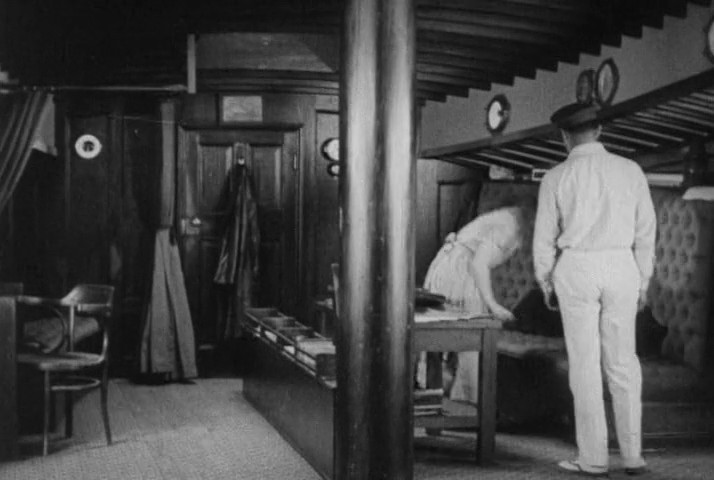
On deck she works you; below, she takes you in. Down the companionway is the main saloon, an enormous room by the standards of a 52-foot boat: banquette seating running down both sides, a full bar, and the varnished trunk of the mainmast coming down through the middle of it like a column in a club room. The joinery is panel-and-beam, honey-colored, and every bulkhead carries the record of her racing life: trophy plaques by the dozen, half-models, the ship’s clock and barometer. To sit below is to sit inside her résumé. It is a space built for company, and it explains as much about her long survival as her sail plan does: a boat this welcoming gets used, and a boat that gets used gets kept up.
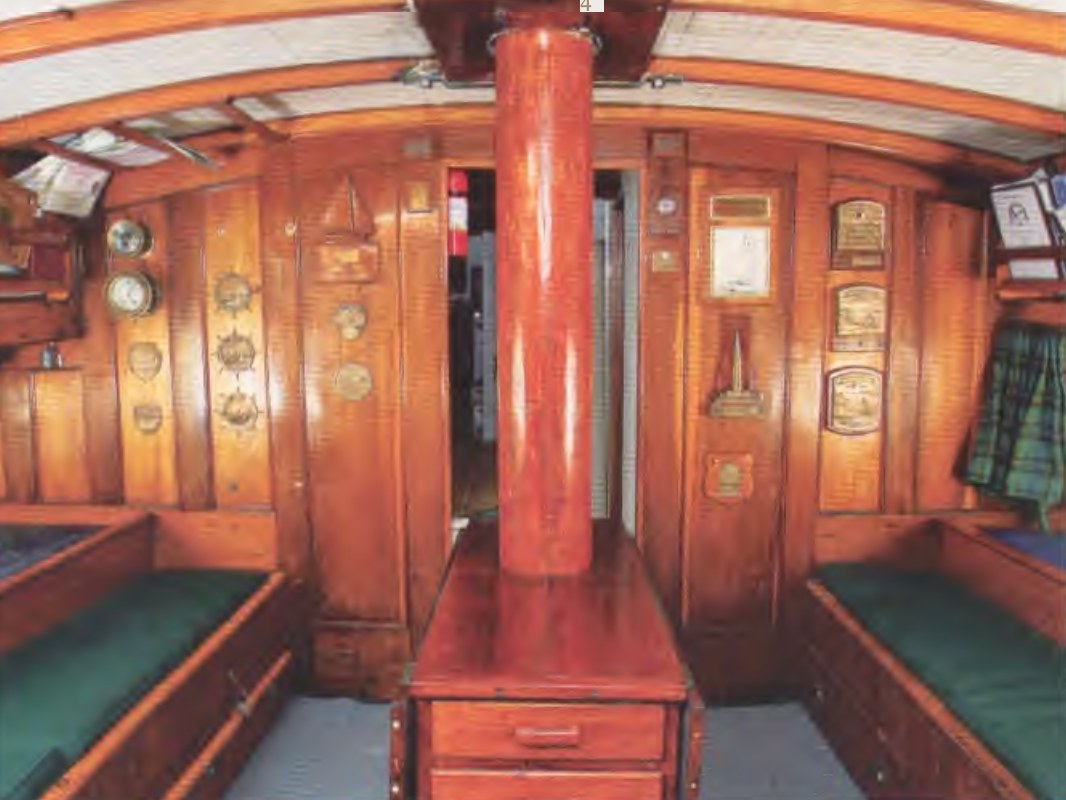
This is the room where the other half of her history happened. The log was signed here: Walter Cronkite on a Stag Cruise, the Bohemian Club committees rendering verdicts like “OUTRAGEOUS!” The galley’s output and the bar’s hospitality anchored the raft-ups, the Delta cruises, and the New Year’s mornings that the logbook records with such affection. Guests who never once touched a line remembered the boat all their lives because of this cabin.
The movies noticed it too. When Goldwyn’s company staged Wild Oranges around her in 1923, the cabin interiors they shot — deep-tufted settees under deck beams, a paneled companionway — closely match her configuration, though the even, shadowless light betrays a soundstage’s hand. Even Hollywood’s version agreed on the essential point: the heart of this boat is the room at the bottom of the ladder.
Her current power plant is a Perkins 4-236 diesel engine, installed to replace earlier gasoline units.