Chapter I · 1853–2004
The Builder
Three generations of Stones built boats on San Francisco Bay for a century and a half — and Yankee was their masterpiece.
The story of Yankee begins with the family that built her. William Isaac Stone came to San Francisco from Dartmouth, England, where the family memoir records that he had learned wooden boat building as an apprentice. With the Gold Rush in full swing and San Francisco Bay still largely without shipyards (boats were being built on the East Coast, dismantled, and shipped around Cape Horn for reassembly), Stone saw an opportunity. In 1853 he established a boat yard at Hunters Point, working under a Master Carpenter’s Certificate. Over the following four decades he built small boats for oystermen, commercial schooners, and racing yachts. Family history credits his sloop Emerald with winning the first regatta of the San Francisco Yacht Club, founded in 1869 and the oldest yacht club on the Pacific Coast, though the club’s own history names Emerald’s owner, founding member John L. Eckley, as her builder. Either way, the Stones were present at the creation of organized yacht racing on the Bay.
William Isaac Stone ran the Hunters Point yard until 1892, when his elder son, William Frank Stone, known universally as Frank Stone, succeeded him. Frank had been born in 1868 and learned the trade at his father’s side. In 1893 he opened his own yard across the Bay at Tiburon, on the waterfront where Sam’s Anchor Café stands today, in partnership with a man remembered only as Swann. The Stone & Swann yard built yachts, gasoline-powered launches, and rowing boats — a small operation, with the family living above the shop. Early productions recorded in the family memoir include the 38-foot sloop Gladys (1894) and the sloops Amigo and Nixie (1896).
In 1899, Frank Stone moved back to San Francisco and established a much larger yard at Harbor View, the waterfront district adjacent to the Presidio, in partnership with Edgar N. Van Bergen; the firm there traded as Stone & Van Bergen. His output ranged from fine racing yachts to commercial workhorses: steam tugs, traders for the Alaska fishing trade, gasoline freighters for the lumber and oyster industries, and launches and tugs for the Crowley fleet. In 1901 the yard produced its most ambitious vessel to date: the W. H. Marston, a five-masted schooner of some 225 feet and the first five-master built in San Francisco, ordered by Marston & Godfrey for the Hawaiian sugar trade. She sailed for a quarter century before being lost in a Gulf of Mexico storm in December 1927.
The Stone yard at Harbor View became one of the most productive wooden boat shops on the Pacific Coast. In 1907, the year after Yankee’s launch, Stone delivered the 68-foot schooner Martha, designed by B. B. Crowninshield for San Francisco Yacht Club Commodore J. R. Hanify. Martha would go on to have her own remarkable life: owned by the actor James Cagney from 1934 to 1943, brought north by Edgar Kaiser, who donated her to a youth camp on Orcas Island, and today operated as a sail-training vessel by the Schooner Martha Foundation of Port Townsend, Washington. In 1908 Stone launched the 198-foot steam schooner Carlos. And in 1918 the yard built the three-masted schooner Palawan, whose carved figurehead and gold-leaf decorations the family memoir describes as the last truly elaborate carvings executed for any Stone vessel. Palawan carried oil to Australia and copra from Tahiti to France before being bombed and sunk in the Thames during the Second World War.
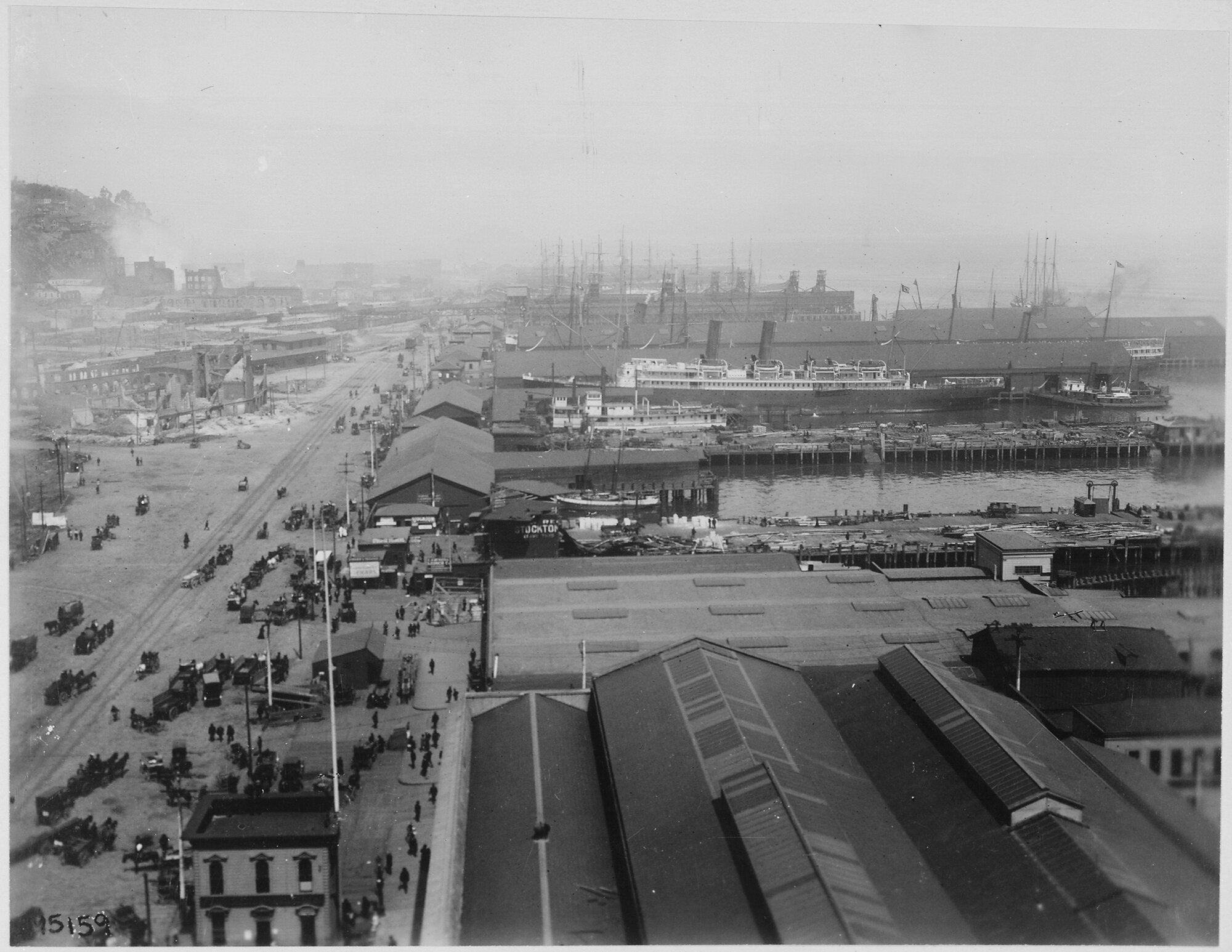
When the city selected Harbor View as the site of the Panama Pacific International Exposition, Frank Stone was obliged to vacate. In 1911 the Exposition’s builders began clearing and filling the tidal flats to raise the fairgrounds on the very ground where his ways had stood — the site that would later become San Francisco’s Marina District and, eventually, the home of the St. Francis Yacht Club. Stone moved his operation across the Bay to the foot of Diesel Way on the Oakland Estuary. His son, Lester Frank Stone, then a young man of about nineteen, was formally brought into the business at the move, and the firm took the name it would carry for the rest of its life: W. F. Stone & Son. (See Chapter IV on the Exposition and Yankee.)
Frank Stone died in 1923. His son Lester carried on the yard, and in 1927 built what was then celebrated as the largest schooner yacht ever launched on the West Coast, the 140-foot auxiliary schooner Northern Light, for Chicago businessman John Borden, who wanted a vessel strong enough for an Arctic expedition collecting specimens for the Field Museum. Evicted a second time, by wartime requisition, the yard moved to Blanding Avenue in Alameda in 1941. Lester Stone ran it until his retirement in 1970 and died in 1975; under successive owners the Stone Boat Yard kept the family name alive until it finally closed in 2004.
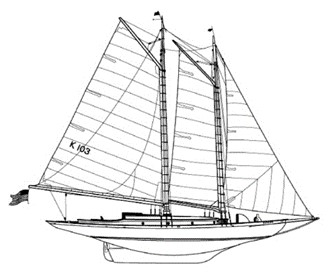
The Stone family’s contribution to San Francisco Bay maritime life thus spanned three generations and over a century, from the Gold Rush to the new millennium. Yankee, launched from the Harbor View yard in the spring of 1906, was one product of that tradition — and she is today the oldest Stone-built vessel still sailing the Bay where she was born, elder stateswoman to the handful of surviving Stone boats, among them the 1928 cutter Water Witch and a flock of 1920s Bird-class sloops, that still race in her wake.