Chapter V · 1925–1942
The Ford Family
“I’ve found our boat!” — five generations begin, from a schoolboy’s discovery to the founding fleet of the St. Francis Yacht Club.
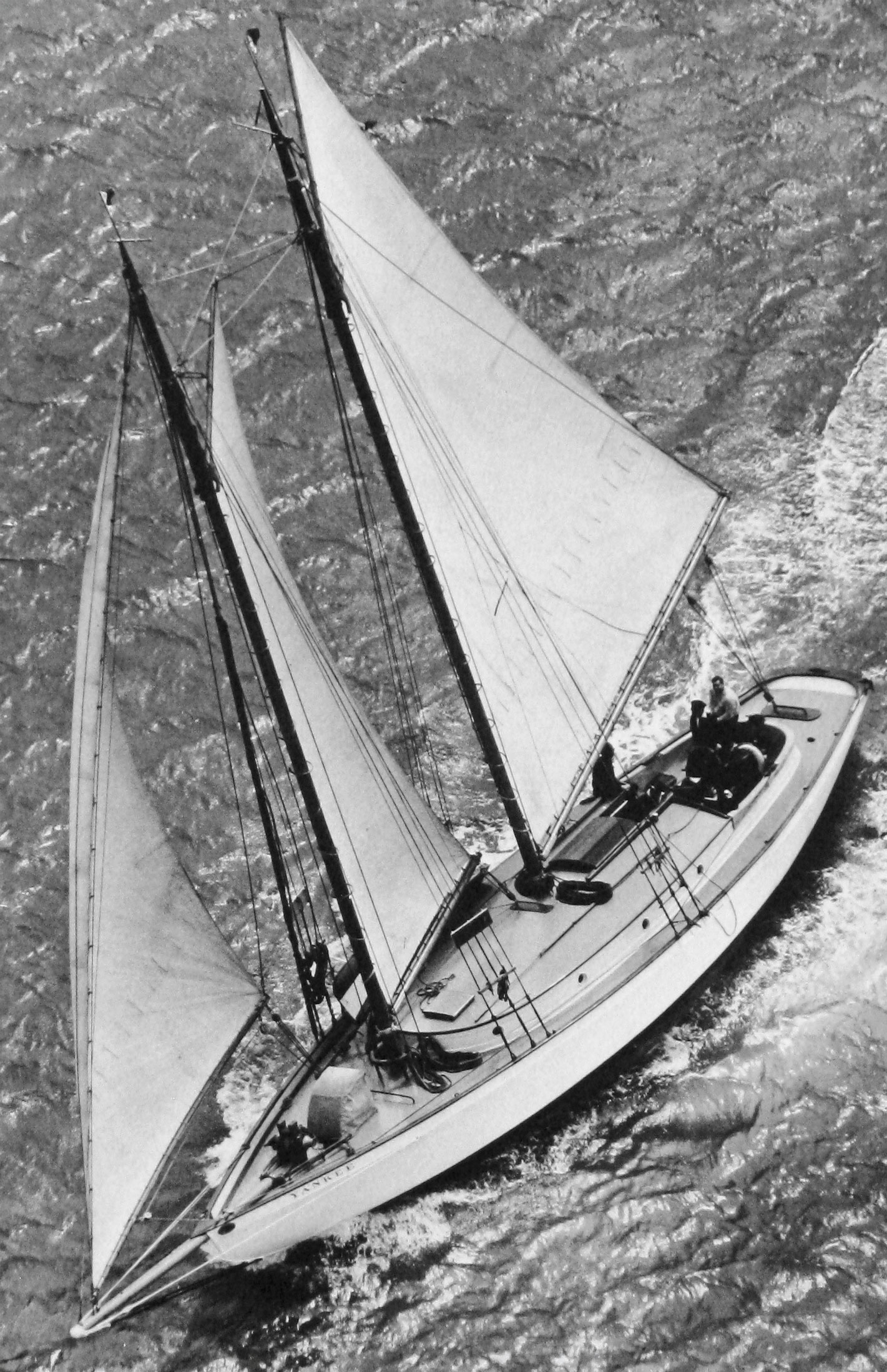
One day around 1925 or 1926 (the date is given as 1925 in most family documents and as late as 1927 in others), a schoolboy named Robert D. Ford was bicycling home from school along the San Rafael Canal when he came upon Yankee sitting there, apparently abandoned. He looked her over with great excitement and hurried home to his father and uncle. His announcement has become one of the most quoted lines in Bay sailing lore: “I’ve found our boat!”
Arthur and Sydney Ford, Robert’s father and uncle, had been looking for a family boat. They negotiated with Charlie Miller and purchased Yankee, bringing her across the Bay to the San Francisco city front. The timing was providential. In 1927, forty-nine members of the San Francisco Yacht Club, which had just voted to move its clubhouse to Belvedere, resigned in a body to found a new club on the Marina, on land created for the 1915 Exposition: the St. Francis Yacht Club. The Fords and Yankee were part of that founding generation, and she took a berth on the westernmost dock of the new yacht harbor — a hundred yards from where she had been launched at the Stone yard. She would lie there for some eighty-five years, until the city’s renovation of the West Harbor ended the arrangement in 2012.
The Ford brothers were active racers and cruisers who continued Miller’s tradition of coastal voyages to Southern California, cruises that would, in time, put movie royalty on her deck (Chapter X tells that story). They were also men with a healthy sense of fun, as several well-worn anecdotes attest, including a failed attempt to steal the fog bell off the northwest point of Angel Island, an escapade that ended with a swamped dinghy, an abandoned bell, and a long sobering swim back to the boat.
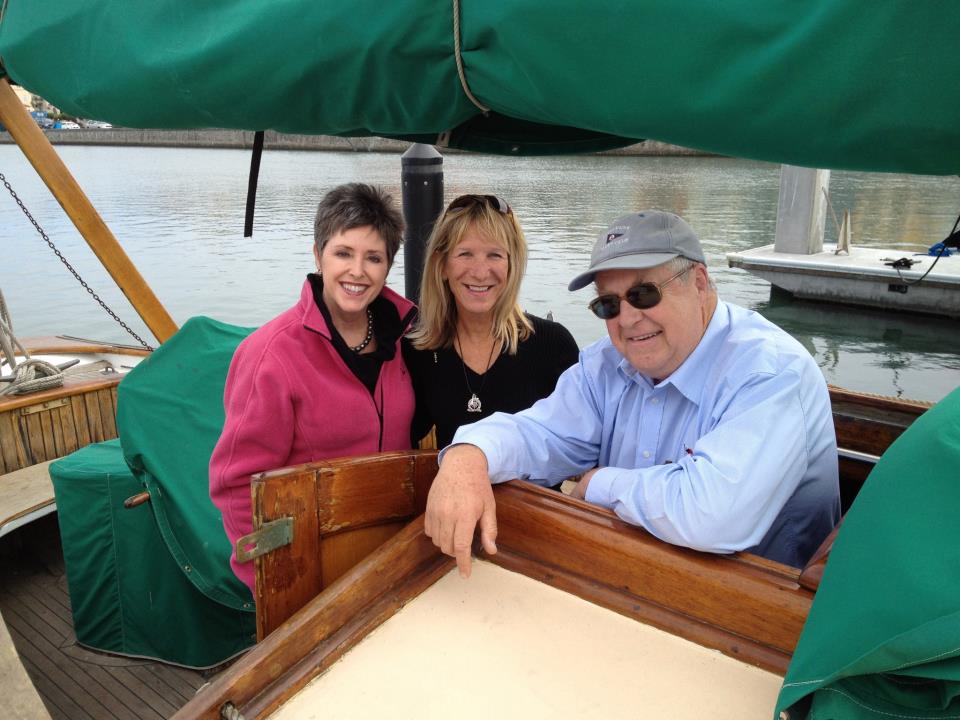
Arthur Ford, known to all as “Skipper,” was a legendary helmsman. His reputation rested on an extraordinary knowledge of the tides and currents inside the Bay. While other boats would head for the middle of the Bay to catch the afternoon westerlies, fighting the flood current, Skipper would ghost up the city front in the last of the ebb, gin cocktail in hand, and arrive at the finish well ahead of the fleet. His philosophy of crew selection was equally firm: those who put in the work maintaining the boat earned the right to sail her when the racing began.
In 1933, Yankee was stolen from her marina berth. The thieves sailed her out through the Golden Gate — in itself a bold piece of seamanship — but got no further than Ocean Beach, a few miles south of the strait, where they abandoned her. She was driven ashore in the surf off what was then Fleishhacker Zoo. Rolling in the breakers, she took on a great deal of sand before being dug out and towed off after several attempts by a large steam tug. The only structural damage was to the forward bulwarks, where the tow hawser went over the top. The prevailing suspicion was that the caper had been concocted by Stanford students on a lark. The logbook preserves a tantalizing postscript: at the 1989 Classic Boat Show, a visitor came aboard and introduced himself as one of those associated with taking Yankee on that wild ride. Sand from the episode has continued to turn up in remote corners of the bilges for decades.
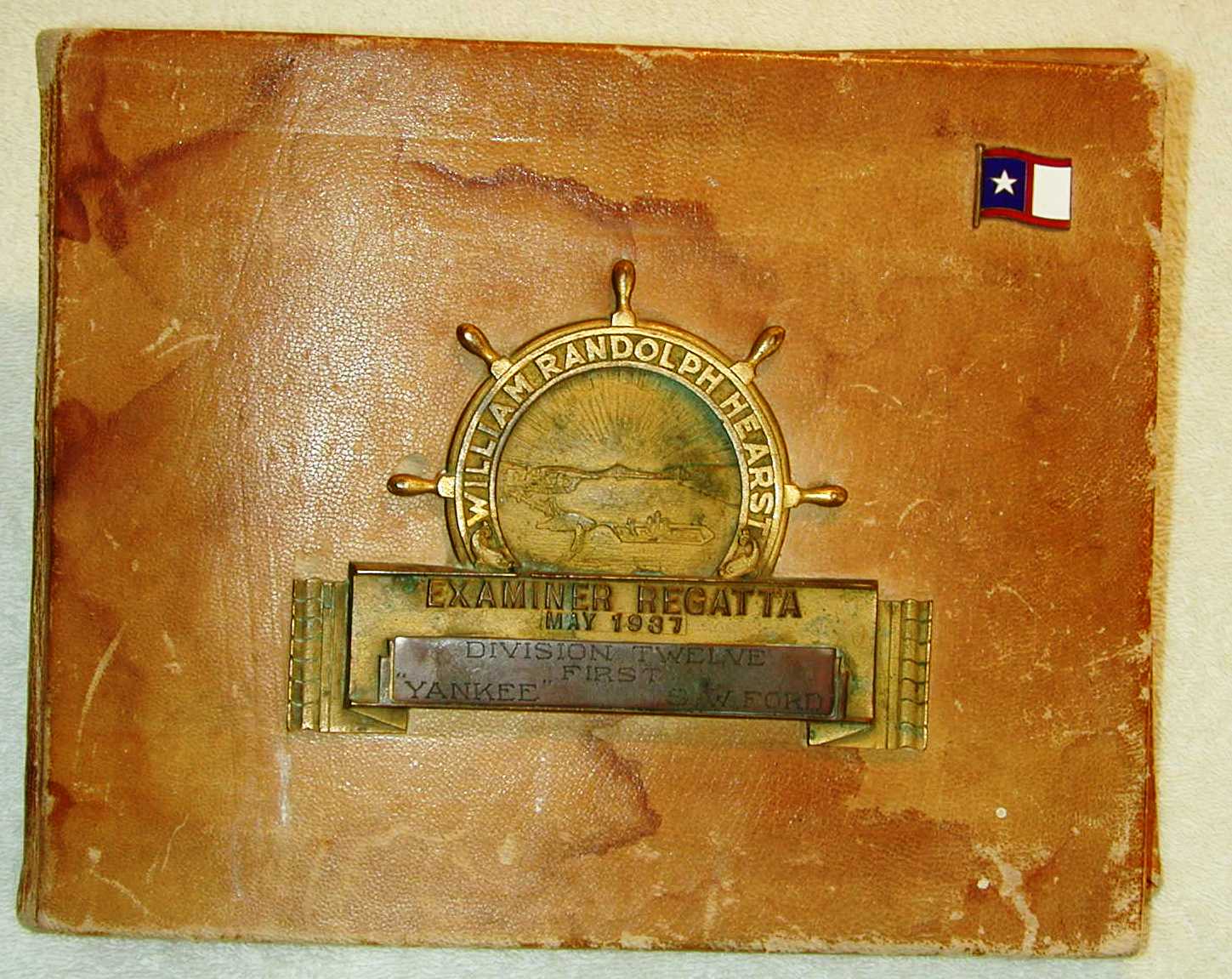
In May 1937, Yankee won her division of the Examiner’s William Randolph Hearst All-Clubs Regatta — and the trophy was no cup at all, but a leather-bound ship’s logbook with a brass ship’s wheel medallion on its cover, engraved “Examiner Regatta, May 1937, Division Twelve, First, ‘Yankee’, S.W. Ford.” The family put it to use. That logbook, kept off and on for the next sixty-one years, became the single most intimate document of Yankee’s life: a record of races, cruises, guests, pranks, and farewells (see The Captain’s Log). Its first great entry came just six weeks after the Hearst win: the three-week Southern Cruise of July 1937, down the coast to Santa Barbara and the Channel Islands.