Chapter VII · 1945–1995
The Postwar Decades
Commodores and legends: “Yankee Weather,” Bobby Ayres aloft, Cronkite on the Stag Cruise, and the passing of the torch.
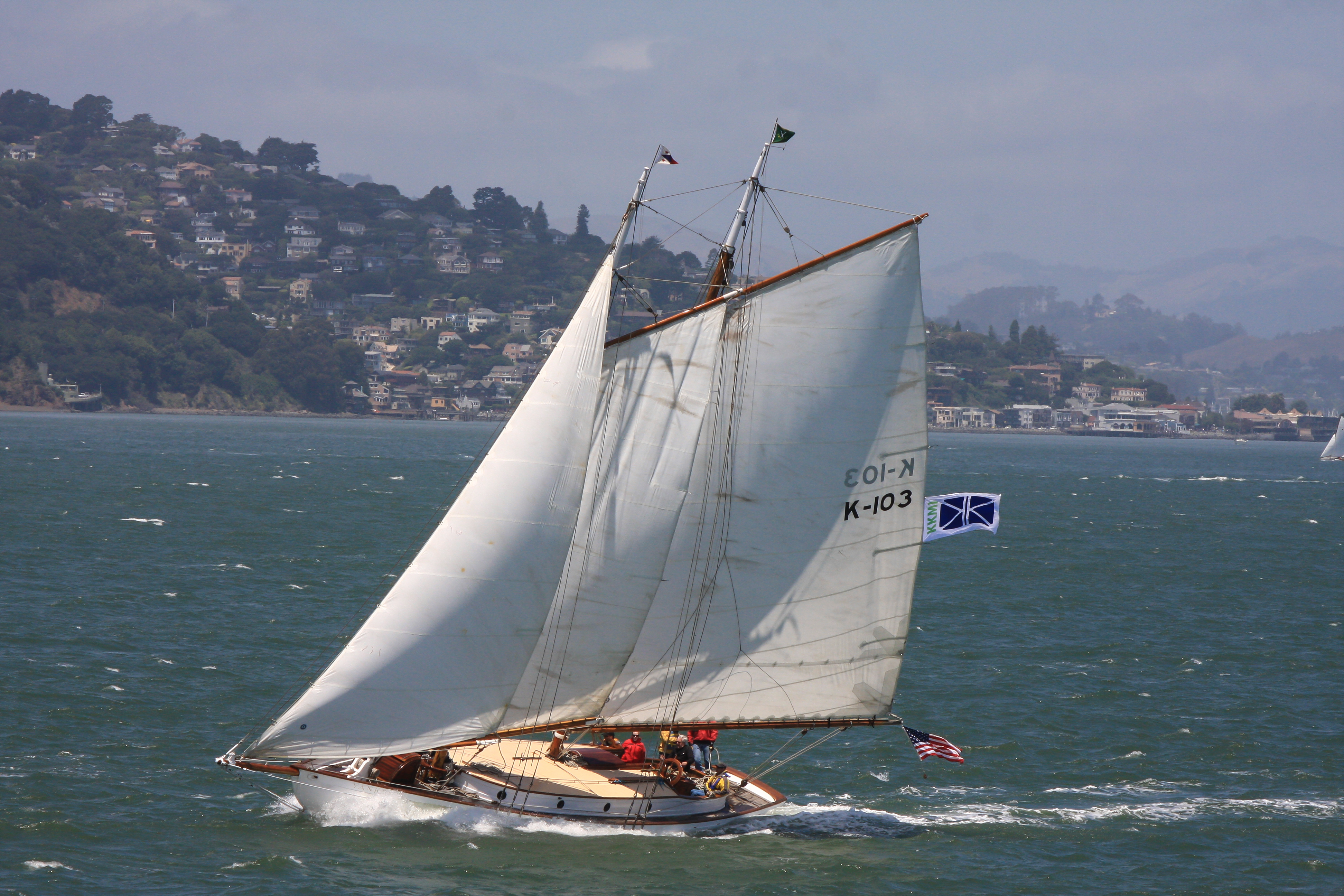
Arthur Ford served as Commodore of the St. Francis Yacht Club in 1951 and 1952, with Yankee serving as the club’s flagship for her third and fourth years. Arthur was an accomplished skipper who continued to post wins in the Windjammer and Farallones races. During one hard-driven Farallones return, his nephew Dick Ford came below to report that conditions on deck were getting dangerous and asked what to do. Arthur’s famous dictum was the whole of the reply: “Young man, sail her in or sail her under.”
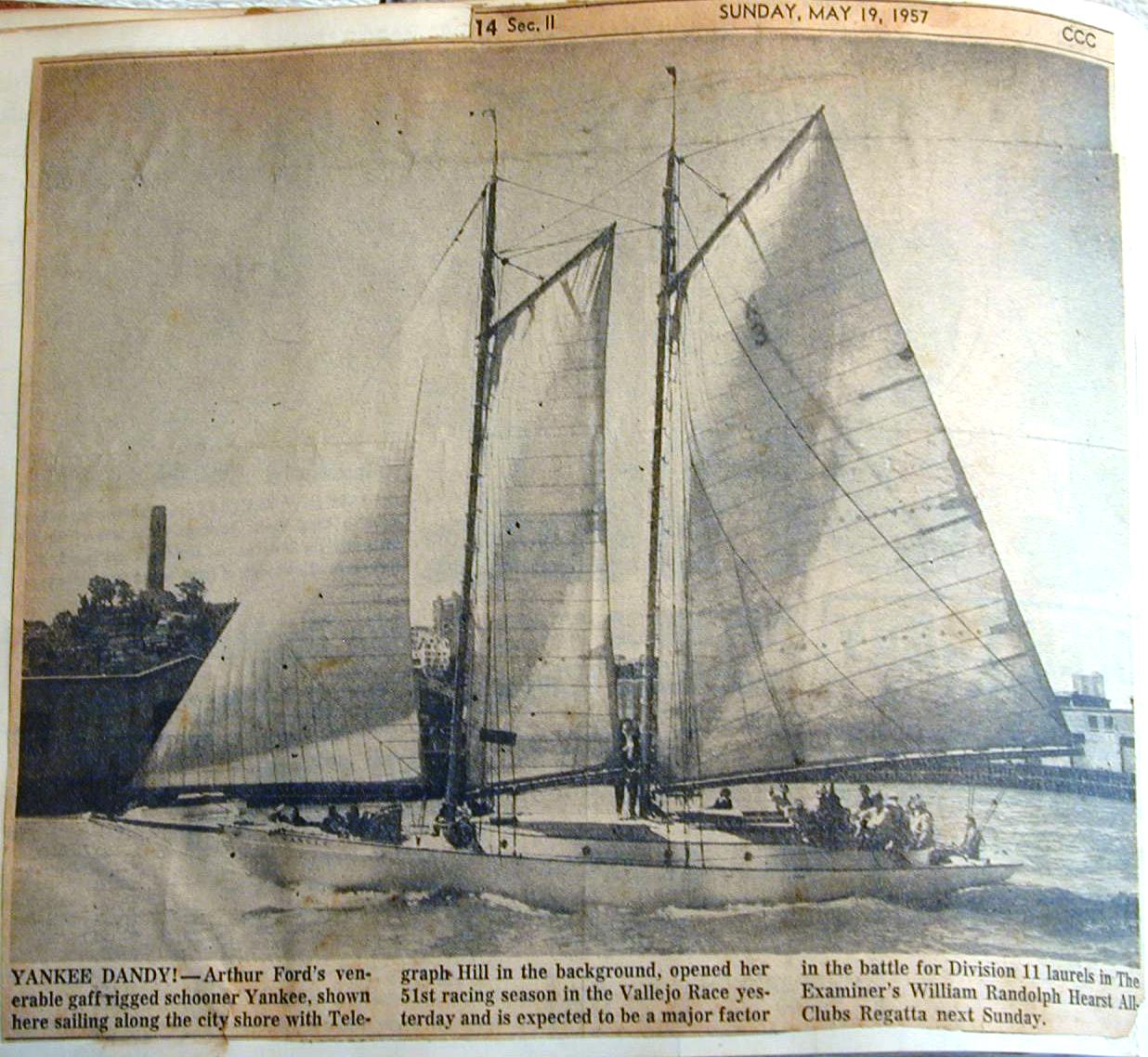
The logbook, silent since 1937, resumes in 1955, and its pages show a boat in her racing prime: a wooden gaff schooner, nearly fifty years old, beating modern Marconi-rigged yachts across the line. The 1955 season opened with first places in the YRA Golden Gate Regatta and the Richmond Regatta. The 1957 season was better still: second corrected in the Vallejo Race (“Everyone wet but happy,” the log reports), the Hearst Regatta won “hands down,” and back-to-back firsts in the YRA opening weekend — “(Whoopee — 2 in a row).” The press took notice. “The venerable Yankee, clicking smoothly for all of her 51 years,” wrote the Examiner after the 1957 Hearst Regatta, “added still another Hearst Regatta trophy to the impressive collection that adorns her cabin bulkhead.” Sportswriter Don Selby coined a phrase that stuck for decades: heavy air on the Bay was “Yankee Weather.”
The same season brought drama: in the Lightship Race of June 16, 1957, Yankee, holding right of way, collided with the steel sloop Trintel a couple of miles off Land’s End. Trintel lost her mast at the spreaders; no one was hurt, and both boats powered home. For repairs, Yankee went to a yard she knew in her bones: Lester Stone’s, in Alameda, where the son of the man who built her patched the gouges his father’s planking had taken.
Between the races the logbook records the gentler life: cruises to Petaluma (aground at Channel Light No. 4, anchor down, dinner cooked without fuss), dancing in the street in Sausalito after dinner “at the delicatessen across from the Glad Hand,” Fourth of July flotillas in the Delta with water-skiing astern and a seaplane alighting to collect homebound guests, and the annual New Year’s raft-up at Paradise Cove, where mornings began with “fizzes in bed & all hands up.”
Robert D. Ford, the boy who had found Yankee on the San Rafael Canal, assembled a devoted crew through these years that included such Bay sailing figures as Bob Davis, Bobby Ayres, Tom “Smokey” McCrae, and Conn Findlay. In 1955 Sydney Ford sold his half-interest to Arthur; Sydney died a decade later, and in February 1965 Yankee carried him to sea for the first of the burials that would become her most solemn office. In 1967 Arthur in turn sold half his interest to Robert, with right of survivorship. Robert had by then become one of the Bay’s most respected yachtsmen; the family history also names him an owner and president of the Barient winch company, a fine irony for a man whose own boat never carried a single winch.
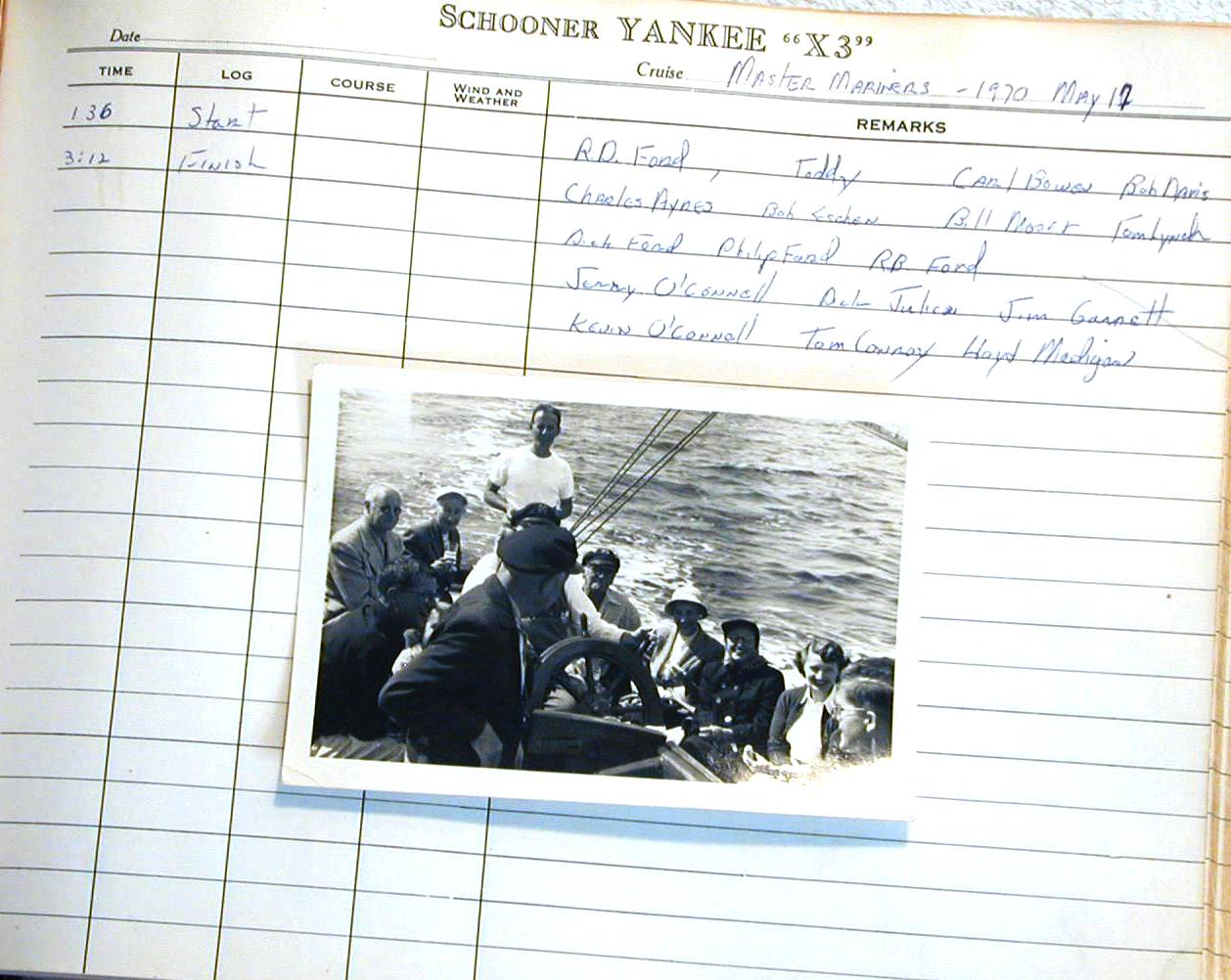
One of the most celebrated episodes of the era occurred during a Master Mariners race, probably around 1969 or 1970. Racing up the city front with about twelve aboard, the top of Yankee’s mainmast broke off at the gaff collar, leaving an eight-foot, two-hundred-pound timber swinging overhead on its rigging like a pendulum. Bobby Ayres volunteered to go aloft. Without a bosun’s chair or safety tether, he shimmied up the shrouds, rigged a halyard to a block on the mast, and with muscle from below on the other end, released the tension and cut the broken timber free. Within half an hour the spar was safely on deck, and so was he. The Master Mariners Regatta itself, first sailed by the Bay’s working skippers in 1867 and revived in 1965, was becoming the spiritual center of Yankee’s racing calendar.
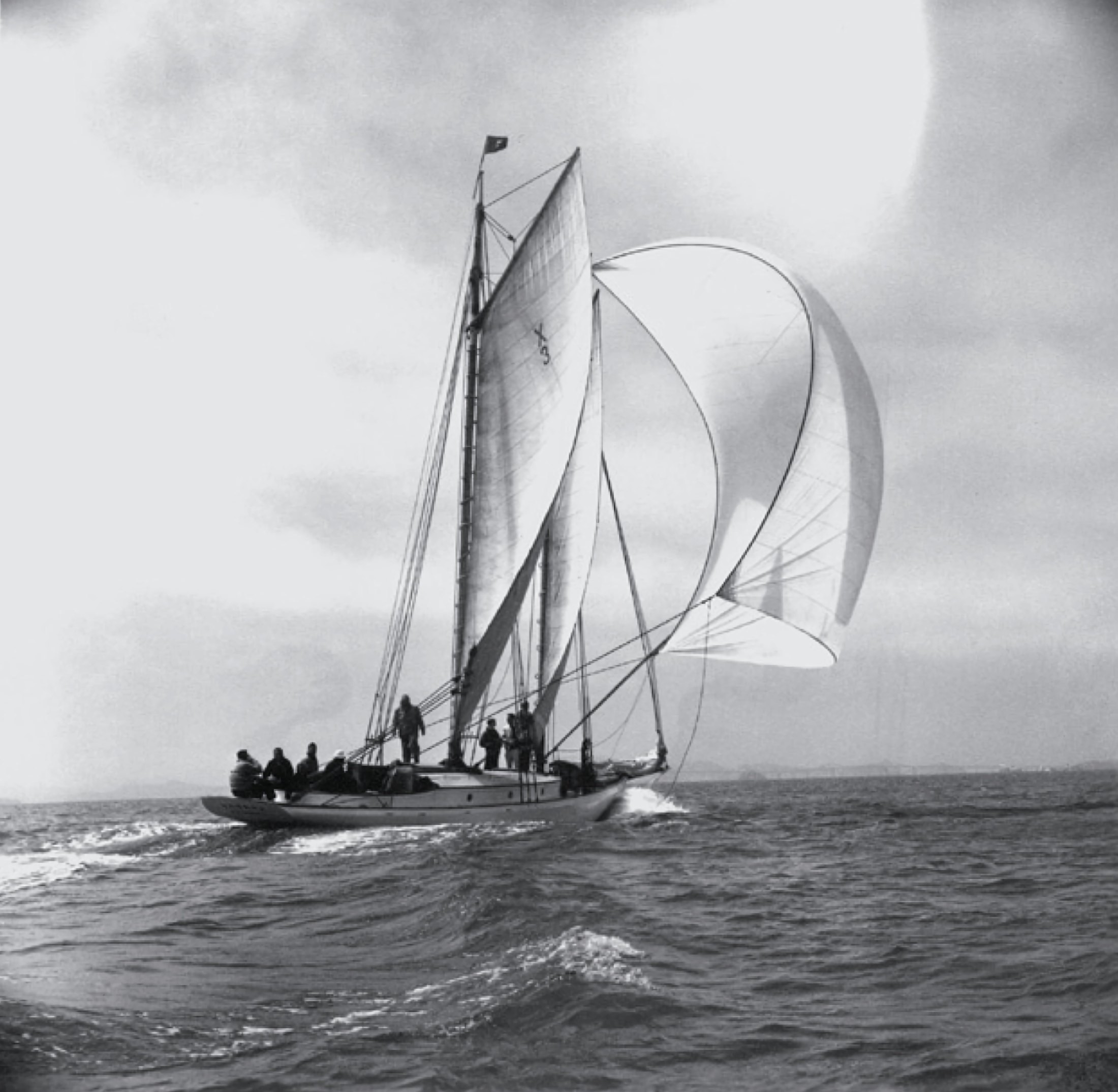
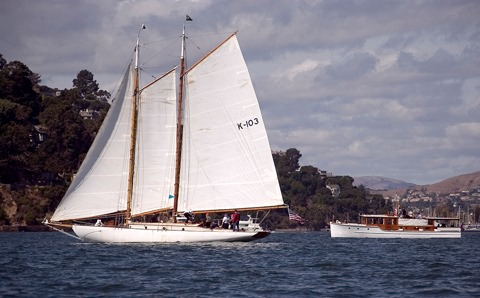
In 1972, Yankee served her fifth year as St. Francis flagship under Commodore Robert D. Ford. In 1976, she won the United States Bicentennial Regatta on San Francisco Bay under Bob Ford’s helm, with Dick Ford and John McNeill among the crew, both of whom had raced a similar course the previous day and knew that the tide was unusually favoring the channel between Angel Island and Alcatraz. Yankee took the inside passage, passed the fleet, and won going away; each crew member received an eagle pin, worn on special occasions ever since.
In 1981, Robert sold half his interest to his son Richard (Dick) Ford. Dick had married John McNeill’s sister, Liz McNeill, after the two were introduced at a party on Union Street, a meeting for which McNeill has claimed he cannot be blamed, as he was, in his words, “under the affluence of incohol” at the time. Dick and Liz had three daughters: Christy, Alexis (Lexi), and Samantha. The logbook of the 1980s is largely Dick’s: engine hours and fuel gallons faithfully recorded, transits to Tinsley Island (the St. Francis Yacht Club’s Delta outstation, purchased in 1958) for the Stag Cruises and family summers, and cruises hosting his Bohemian Club committees at Hospital Cove, the guests signing the log with verdicts like “OUTRAGEOUS!” and “LOVED IT!”
In September 1985, the family suffered a devastating loss when Liz McNeill Ford died of leukemia. She had been diagnosed a year earlier and used the time to say goodbye to a wide circle of friends. On November 2, 1985, Yankee carried her ashes to Kirby Cove, inside the Golden Gate; her husband wrote in the log, “Bird, you will fly in my heart forever.” The Leukemia Cup Regatta would later become one of Yankee’s most important causes.
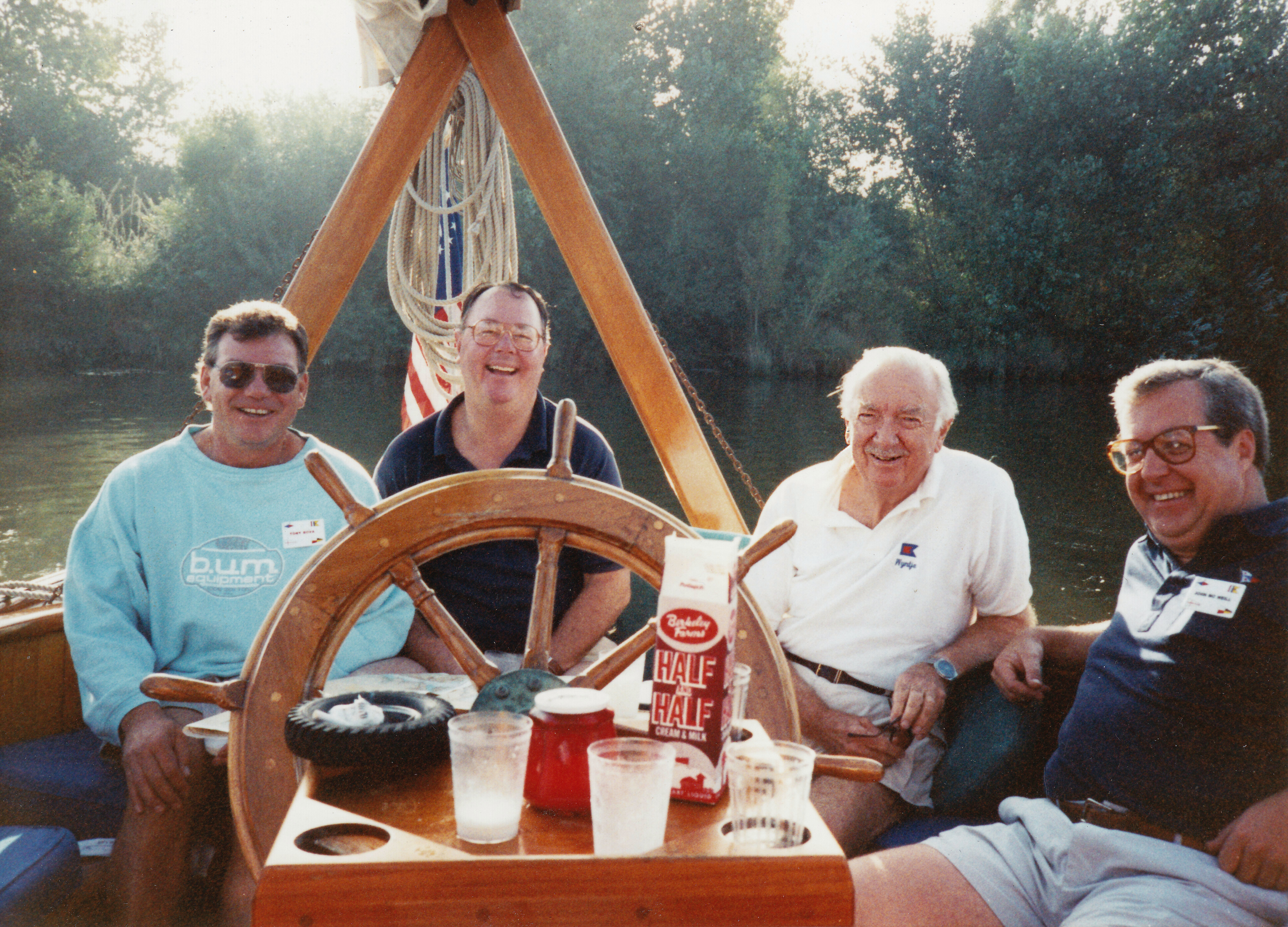
In 1989, Dick Ford was elected Commodore of the St. Francis Yacht Club, following his father, grandfather, and great-uncle in the office. Yankee served as flagship for the sixth time, and the logbook shows a commodore’s year in full sail: the Classic Boat & Car Show in May, the burial at sea of Rod McNeill, John and Liz’s father, in July, and the Stag Cruise in September, for which the log records a most distinguished pair of guests embarking at the St. Francis dock: Gerry Morton and Walter Cronkite. The great CBS anchorman, an avid blue-water sailor whose own yachts were nearly all named Wyntje, rode Yankee to Tinsley Island and back. A week before the Stag Cruise, Yankee had performed a sadder duty, carrying a memorial party to the lee of Point Bonita to toll eight bells for Tom Blackaller, the two-time Star world champion and America’s Cup helmsman who had died at the wheel at Sears Point on September 7, at forty-nine, and whose name now marks the racing buoy off Fort Point. That October also brought the Loma Prieta earthquake — another seismic disruption in the long line of Yankee years — which opened a chasm in the parking lot in front of the club and damaged what remained of the old clubhouse.
Dick Ford steered the boat and the family through the difficult years that followed: a single father to three daughters, keeper of the log, host of the cruises. The logbook’s last decade is increasingly written in other hands: his daughters’, their cousins’, their friends’. On May 5, 1996, the log proclaims Opening Day for “the ‘New’ Yankee,” the vessel now held by The Yankee LLC, the family partnership formed that February (see Chapter VIII). The final entries, in 1997 and 1998, are of weddings anticipated, birthdays celebrated under Fleet Week airshows, and two last farewells.