Chapter X · 1923–1962
Hollywood Cameos
From a King Vidor silent film to sharing the screen with Lee Remick; movie royalty aboard, and sister ships in Hollywood’s sailing fleet, in between.
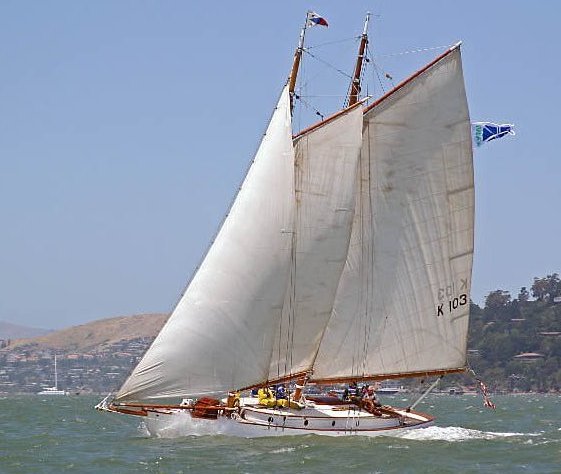
The movies found her early. In the autumn of 1923 Yankee was chartered to Goldwyn Pictures for Wild Oranges, directed by King Vidor from the Joseph Hergesheimer novel and released in January 1924, mere months before Goldwyn merged into the new Metro-Goldwyn-Mayer. The studio’s publicity placed the production in Florida, and for decades that remained the official story. The Yankee crew knew better: examining the film frame by frame, they identified her cockpit, rigging, and hull lines throughout the footage, and in a storm scene near the end of the picture found, for roughly a second and a half, a frame that was unmistakably Yankee. The trade press of 1923, it turns out, backs the family verdict: Camera magazine reported that fall that the film’s yacht sequences were being shot in San Francisco — “several days... spent well out to sea,” night scenes near the wharf, and “a storm at sea off Pier 41” — before the company moved on to the Sacramento River. The location work was in San Francisco; the yacht was working out of Yankee’s home waters; the family’s identification stands on solid ground. The film survives and is available through Turner Classic Movies.
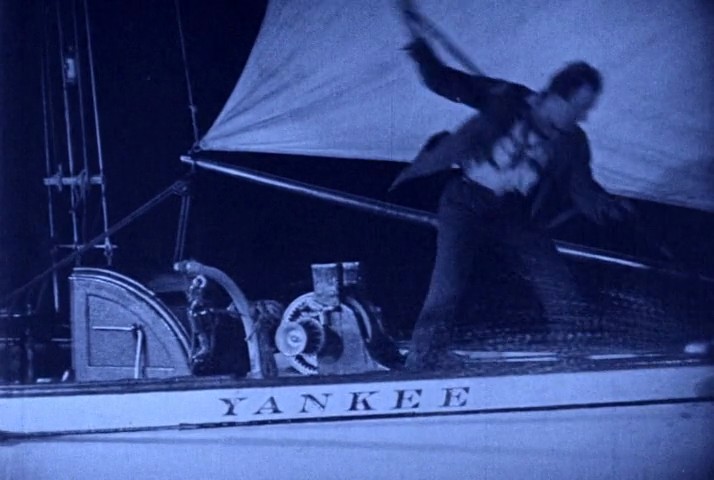
A close viewing suggests how the picture was put together. Wild Oranges reads as a composite of two productions: true location footage of the story’s Georgia swamps shot in the Southeast, and the yacht work (boarding, cockpit drama, the storm) filmed on the West Coast around a real and strikingly handsome schooner. It is precisely in the close, character-driven sequences that the vessel is identifiable down to the name on her bow, while certain distant sailing shots read as a stand-in or effects work, and the cabin interiors, though they match her configuration, are lit like a stage. The seams, once seen, only sharpen the point: when the camera needed a boat worth looking at, it was pointed at Yankee.
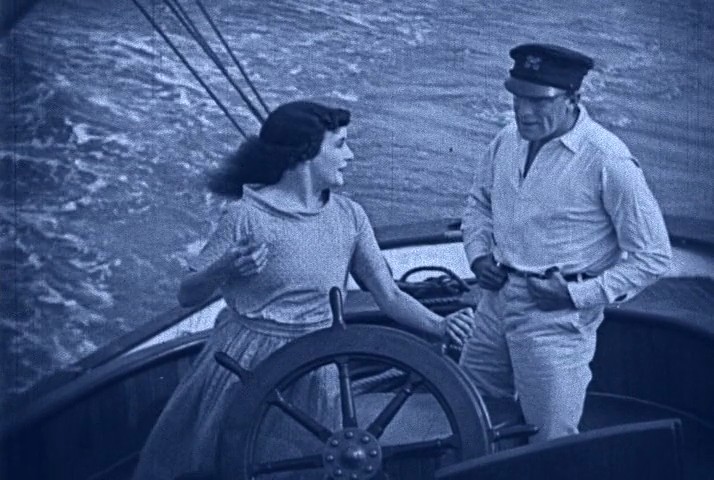
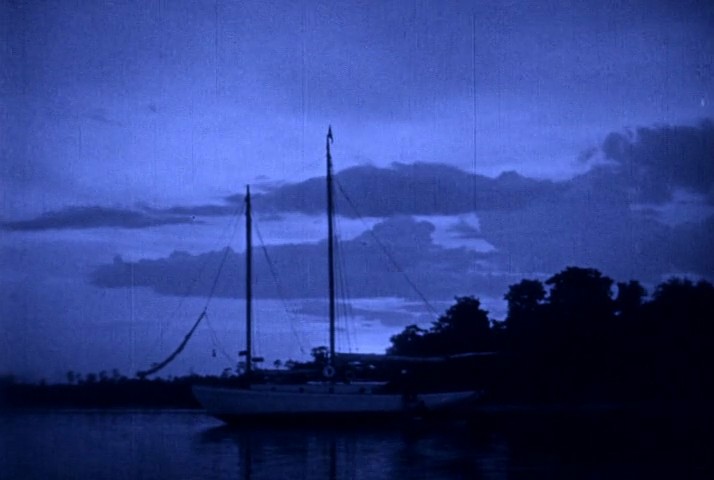
The surviving print explains its own strange beauty. Like most silent features of its day, Wild Oranges was tinted: whole scenes dyed by mood in the era’s visual shorthand, blue for night, amber for daylight and lamplit interiors, the reels physically assembled color by color. The blue cast on these frames is not decay; it is the night falling exactly where King Vidor wanted it, a hundred years on.
The Hollywood connection did not end when the cameras stopped. In the years after the Ford family took her over, their coastal cruises to Southern California put Yankee among the movie colony at its moorings. The family history records that Mary Pickford and Douglas Fairbanks, then the reigning couple of American film and two of the founders of United Artists, were reportedly entertained aboard. America’s sweetheart, on the deck of a boat that had already been in pictures.
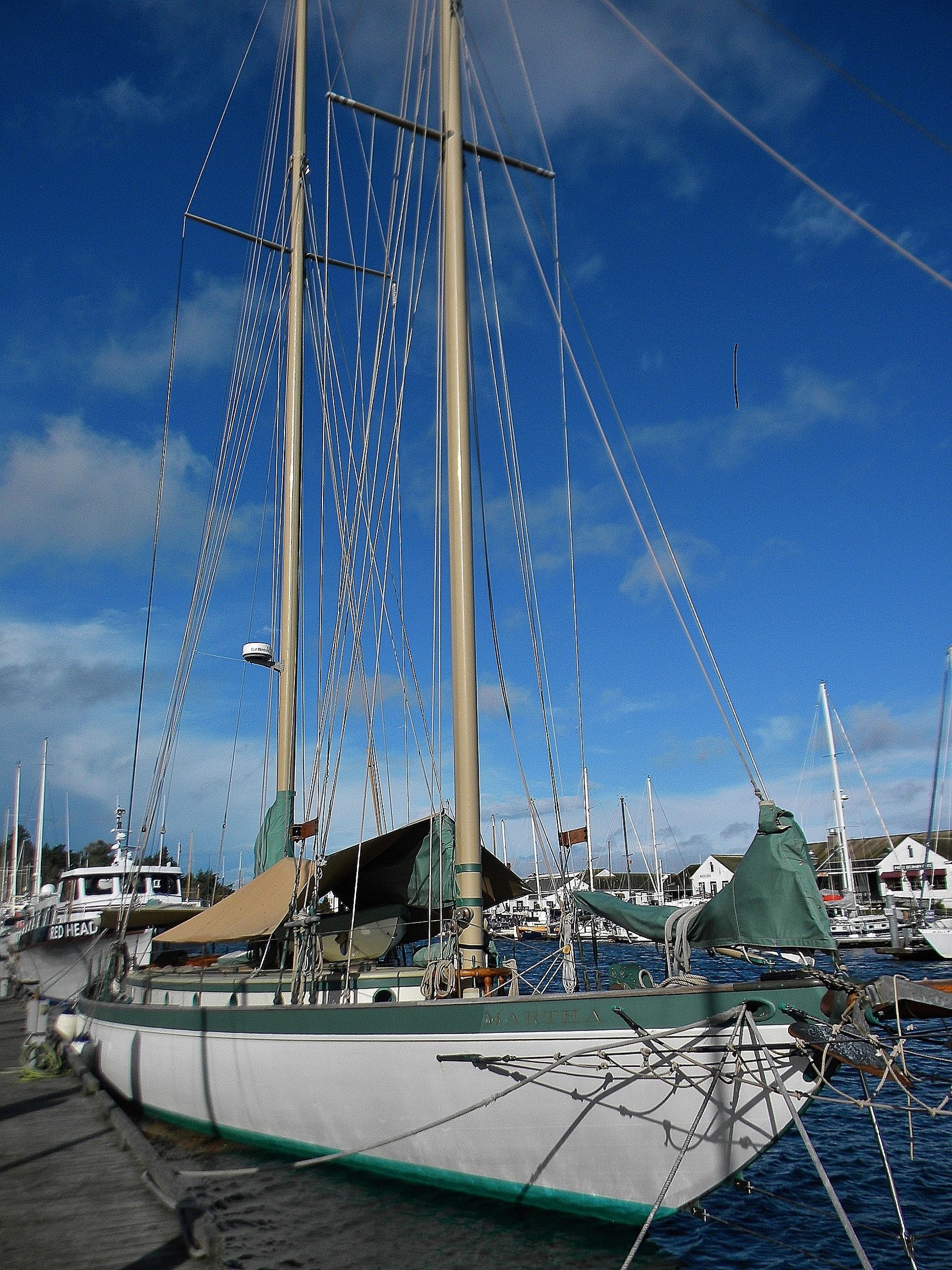
She had company in that world. Hollywood’s leading men kept serious wooden yachts, and two of the best are still afloat. James Cagney’s Martha, a Crowninshield-designed gaff schooner launched from W. F. Stone’s yard in 1907, one year after Yankee, carried the actor through nine years of ownership and sails today under her own preservation foundation at Port Townsend, the oldest living flagship of the San Francisco Yacht Club. Humphrey Bogart’s Santana, a Sparkman & Stephens design built at Wilmington Boat Works in 1935, passed through the hands of actors George Brent and Dick Powell before Bogart bought her in 1945 and raced her hard for a dozen years — Lauren Bacall wrote that the only rival she ever had was the boat. That two Stone schooners (Yankee and Martha, sisters in age from the same San Francisco yard) outlasted nearly all of that glittering fleet says something about how the yard built.
Four decades later she had an unwitting cameo in Days of Wine and Roses (1962), directed by Blake Edwards and starring Jack Lemmon and Lee Remick. The film’s opening was shot on location at the San Francisco Marina and St. Francis Yacht Club; Lee Remick’s taxi arrives at the West Harbor, where Yankee lay in her berth. Bad weather then chased the production’s party-boat scenes south to Newport Harbor.
All eyes are on her, not the boat.
John McNeill, on Lee Remick’s marina scene
Two pictures, four decades apart, and neither one sought — the cameras simply kept finding her. On a bay that photographs like a set, she was always the boat worth pointing them at.