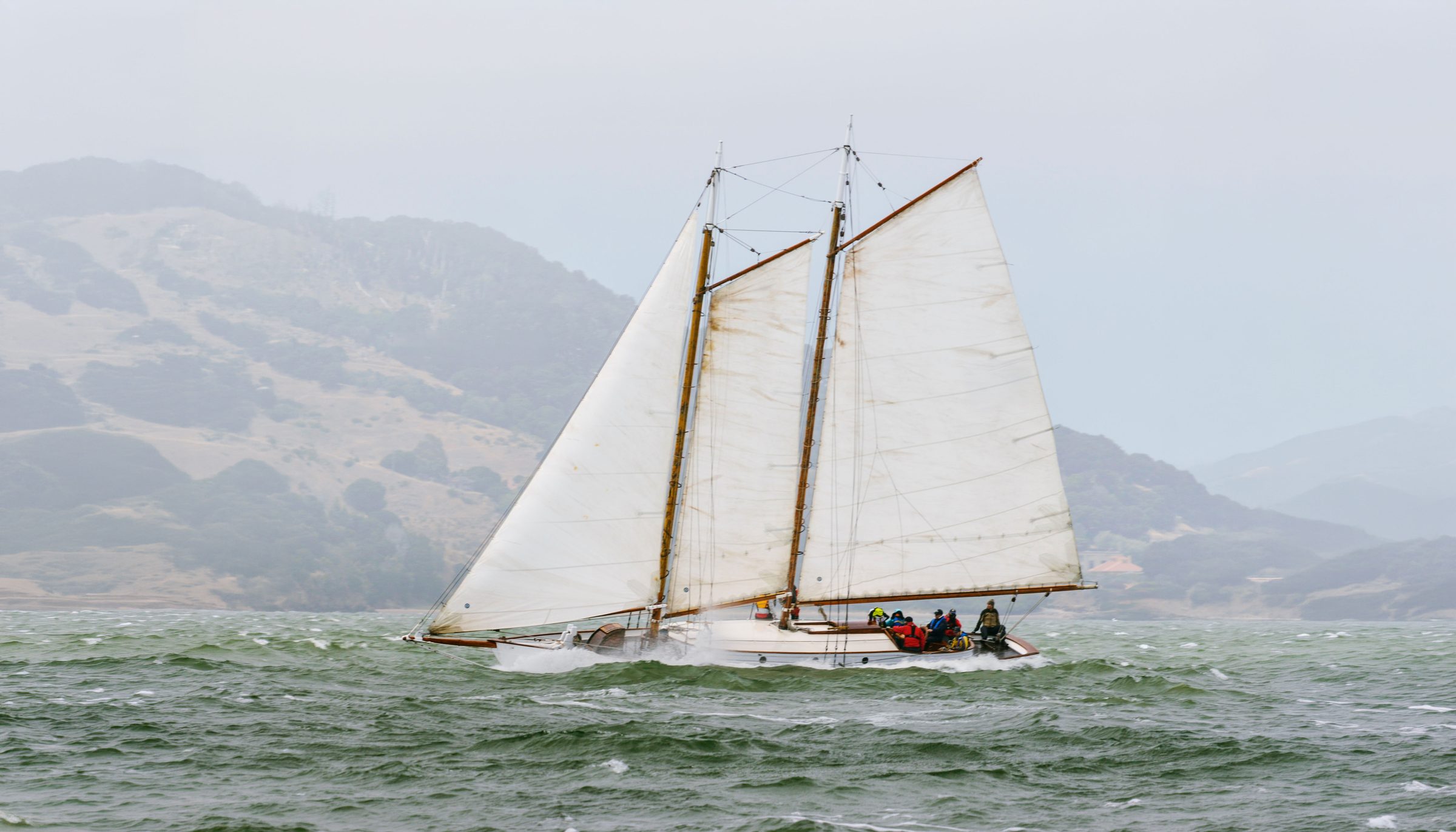
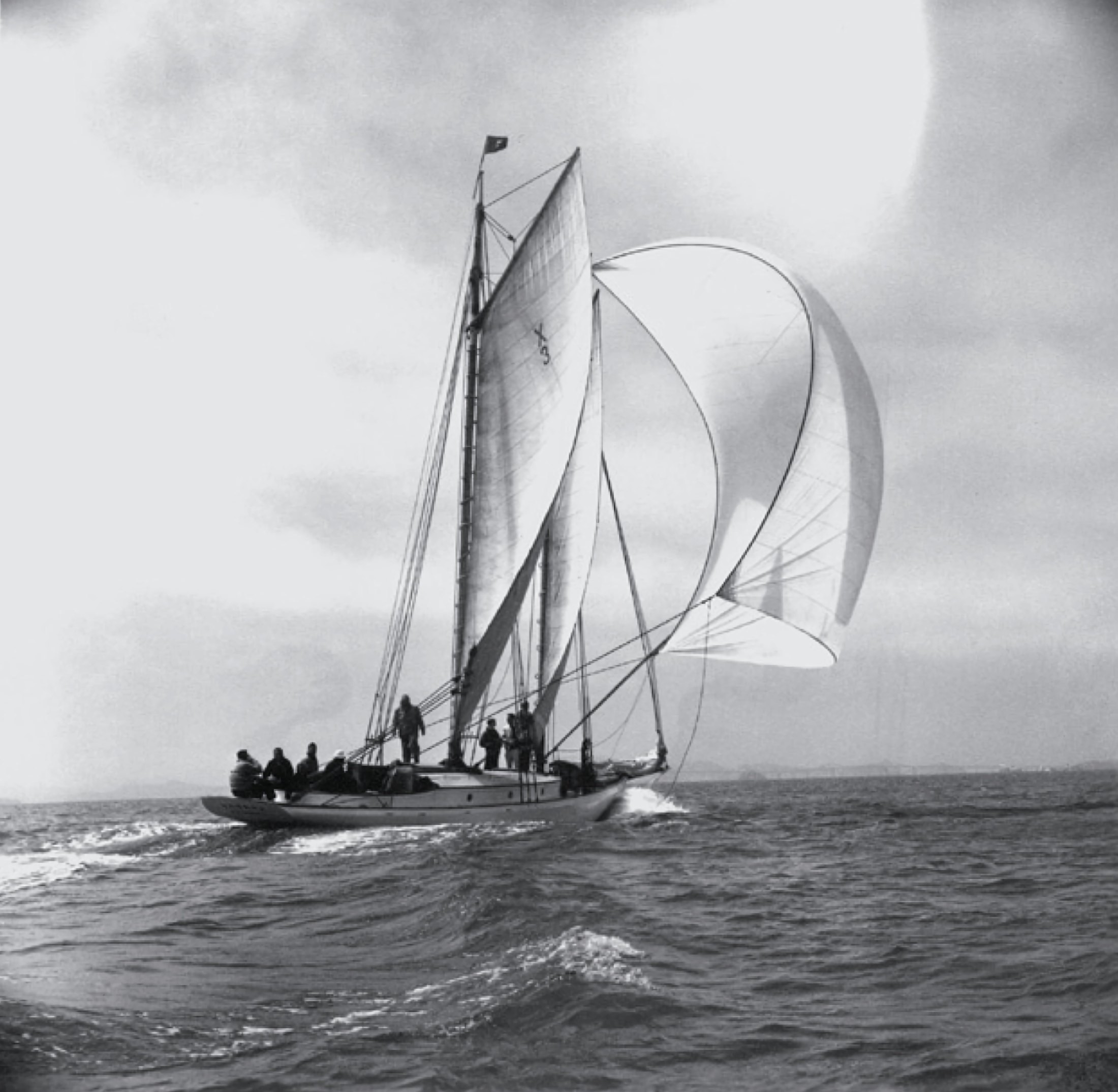
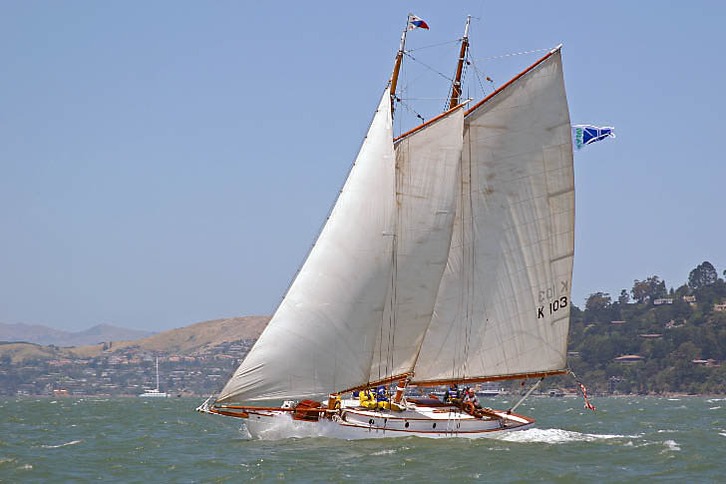
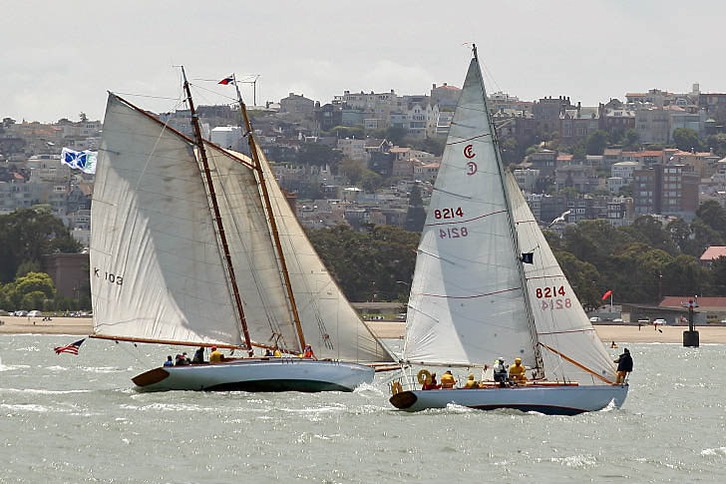
 SFYC Belvedere Classic & Great Schooner Race, 2015 · Photo: Will Campbell
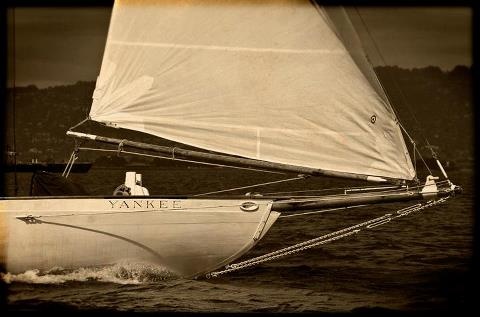
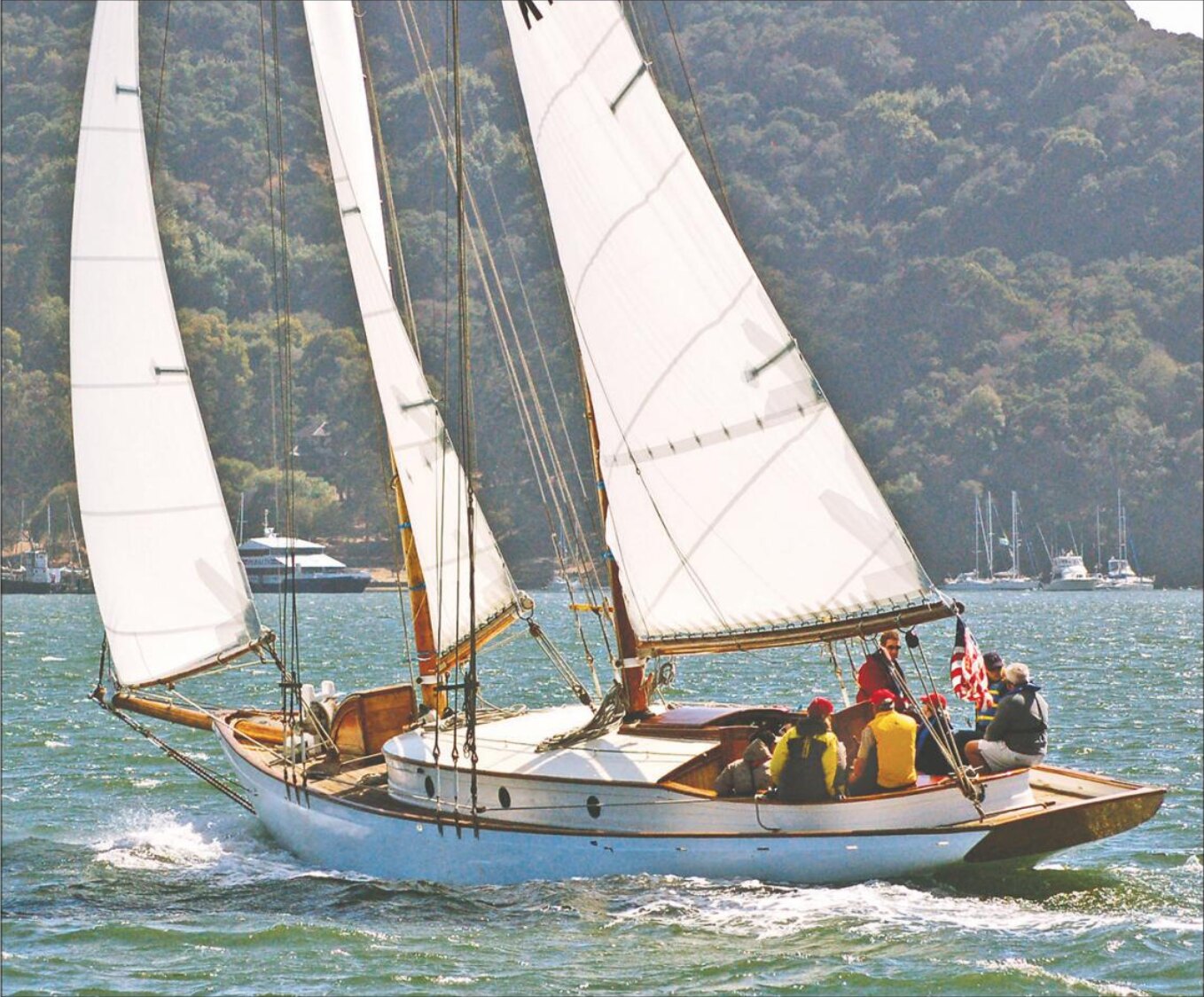
Yankee — the 1906 gaff schooner, under restoration in Sausalito
Year one hundred twenty. 52 ft 6 in on deck, Douglas fir on white oak, launched 1906, no winches aboard — every sheet and halyard hauled by hand. She is at Richardson Bay Boatworks in Sausalito, where we are completing a structural refit begun before the pandemic: ten phases, funded one at a time. We publish the work weekly in the Logbook.

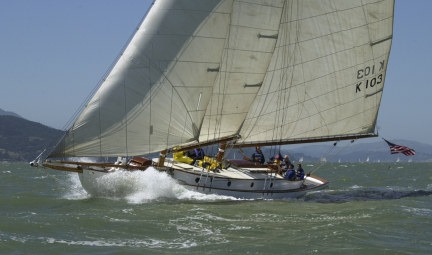
Built 1906. Still racing in her second century.
Frank Stone drew her in 1905 for David Abecassis, who wanted a boat that could win on this Bay, and built her at his Harbor View yard: 52 ft 6 in on deck, Douglas fir planking on white oak frames, gaff rig, no winches then and none now.
The April 1906 earthquake threw her from her building cradle weeks before completion, nearly complete and undamaged; she was finished and afloat that spring. She won her first race that season, took the first ocean race sailed out of the Golden Gate in 1907, and in 1915 won her division at the Panama-Pacific International Exposition regatta, racing past fairgrounds built on the ground where she was constructed.
The record carried into her second century: a Navy patrol vessel in World War II, flagship of the St. Francis Yacht Club seven times, two turns on the Hollywood screen, and a Master Mariners championship in 2015. She is the oldest Stone-built vessel still sailing the Bay.
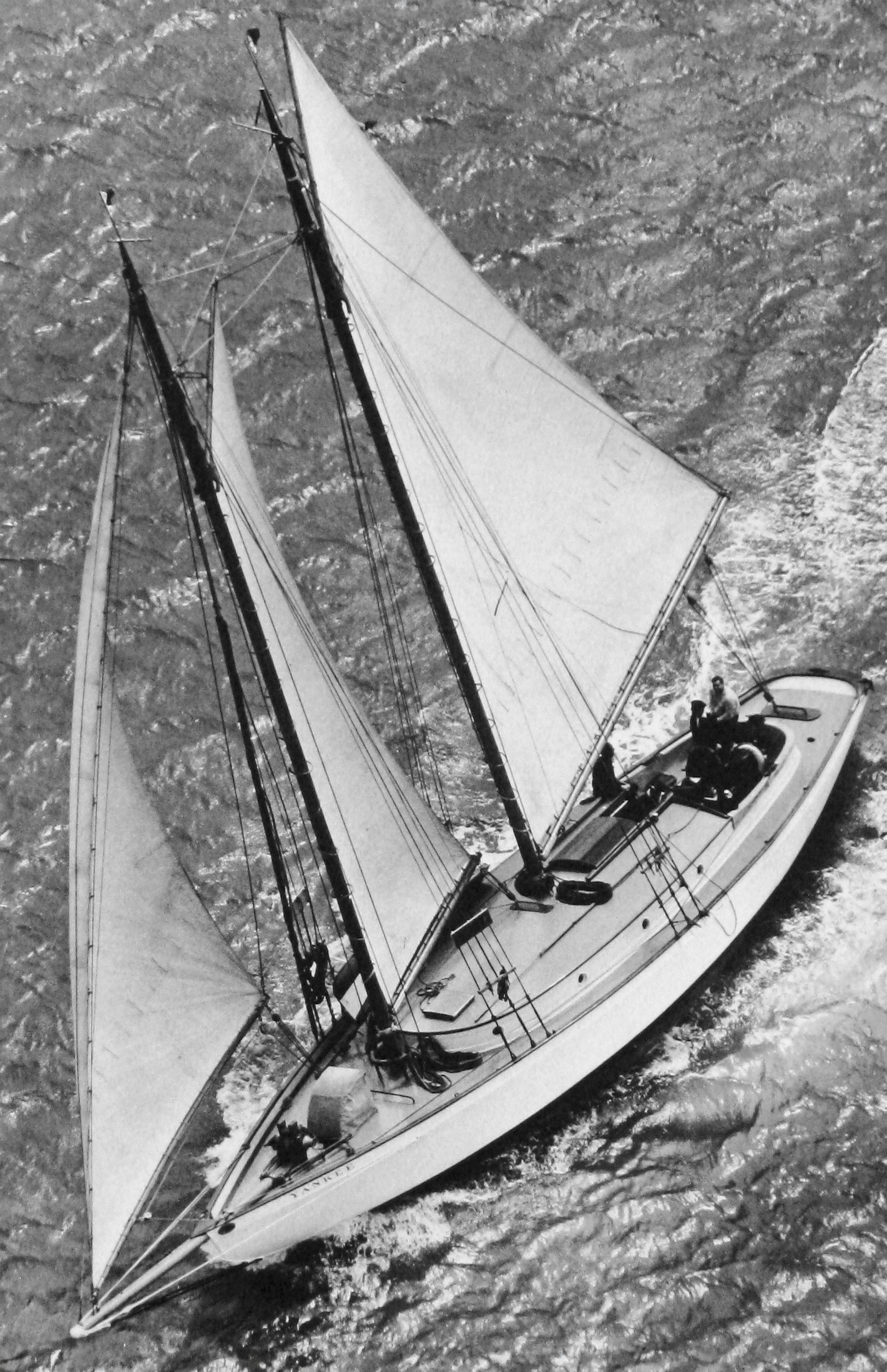
A drawing, and the boat itself.
The drawing at right is the sail plan of Yankee, dated January 1906 and drawn by Lester Stone — Frank’s son, a very young man at the time — showing the boat as she was designed and built, a gaff sloop. It is held in the archives of San Francisco Maritime National Historical Park. The hull’s lines plan, the drawing that defines her shape, is not in hand, and we say so plainly. The design claim rests on the boat: a hull that still carries the shape Stone drew, and a racing record that tests it from her first season onward.
One evolution, stated plainly: she was drawn a gaff sloop. Her second owner, Charles Miller, gave her the schooner rig she carries today in the 1910s, removed her centerboard, and added her first engine. The rig changed. The hull beneath it is the hull Stone drew.
When she comes out of the water at the yard, the Phase 1 survey verifies the hull’s lines directly. That is the drawing we hold: the boat.
The plan itself is a working document: quarter-inch scale, signed and dated in the corner in the drafting hand of the Stone yard. The original is held by San Francisco Maritime National Historical Park; the plate at right is reproduced from it directly.

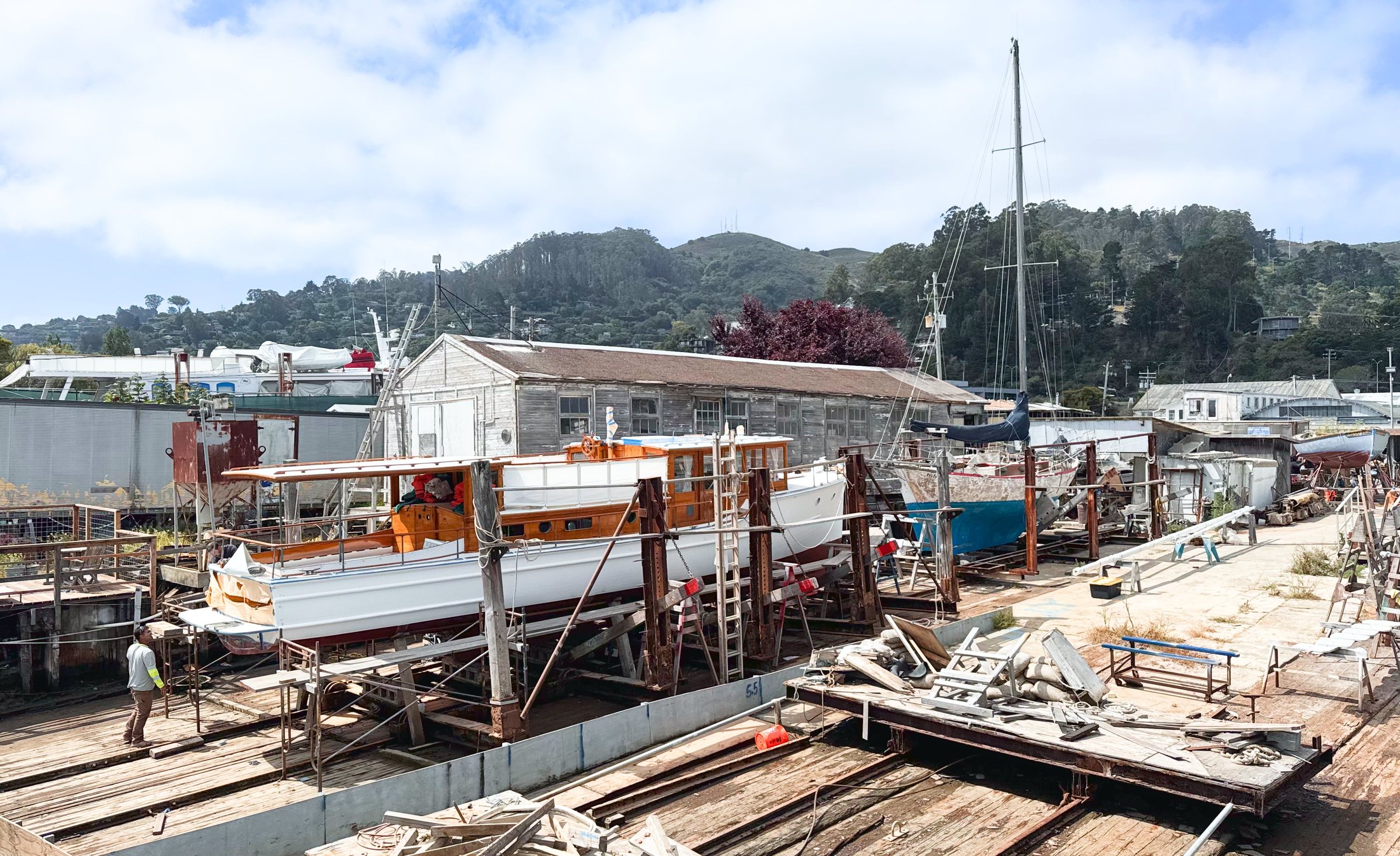
At Richardson Bay Boatworks.
The hardest structural work is already done. Before the pandemic paused the project, Yankee’s frames, stem, and forward planking were rebuilt at KKMI in Point Richmond, the most demanding and invasive phase of her long refit. Her eight refinished spars and a complete suit of new North Sails wait in private storage, and more than 1,000 board feet of prime, air-dried Douglas fir is stacked at the yard for the remaining carpentry.
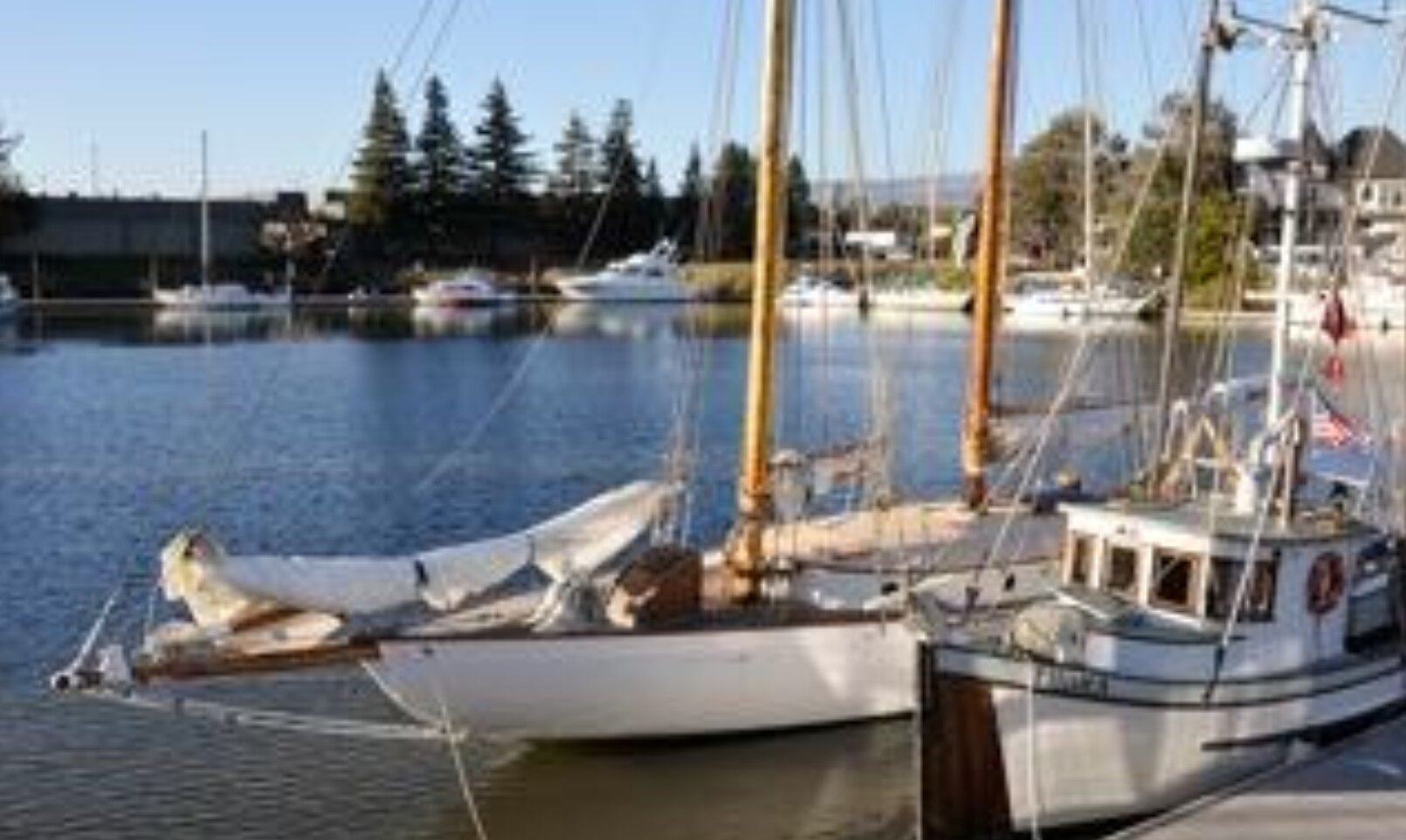
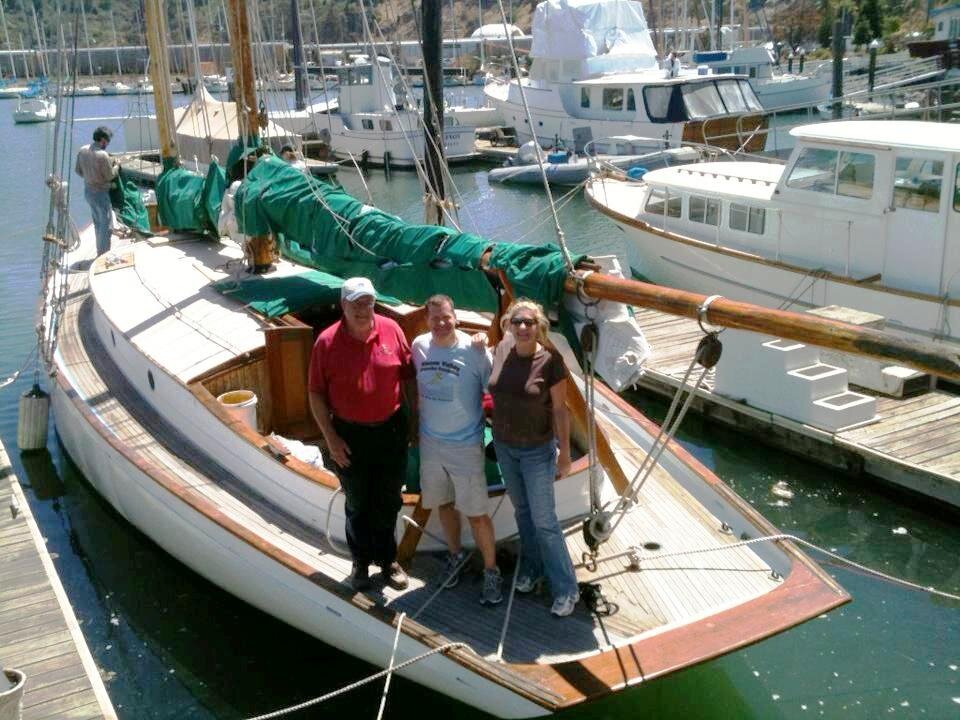
She is at Richardson Bay Boatworks in Sausalito, a family yard in its third generation, on a working waterfront that still builds and repairs wooden boats the way it always has. Ross Sommer, who founded the yard in 1986, is lead boatwright. His son Andrew manages the work. Beside them is Graham Wheelock, a graduate of the Arques School of Traditional Wooden Boatbuilding, which shares the same waterfront grounds.
Haul-out, survey & stabilization
The yard is verifying the hull, plank by plank. The survey sets the scope and budget for Phase 2: the next milestone.
Why the Foundation exists.
San Francisco Bay once built ships, and the skills that built them survive in fewer and fewer hands. The Golden Gate Wooden Boat Foundation keeps historic wooden yachts sailing on the Bay: working vessels in capable hands, not exhibits. It pays the boatwrights, riggers, and sailors who carry the craft forward; every restoration is a payroll and a classroom for traditional skills.
Anyone can watch, follow, or give: the Logbook is open and the letter is weekly. The work itself needs experienced sailors and skilled craftspeople, and the crew page is where to start. Yankee is the first project, not the whole mission.
The Foundation itself stays small by design: volunteer-run, one vessel at a time, funded phase by phase in the open. When Yankee sails again, we will look for the next hull worth keeping.
The Foundation has its own site — mission, project criteria, governance, and its public reference library: the Wooden Boat Atlas, an atlas of the designers, builders, and yards behind wooden boats, and the Maritime Glossary, a sailor’s vocabulary of several hundred terms.
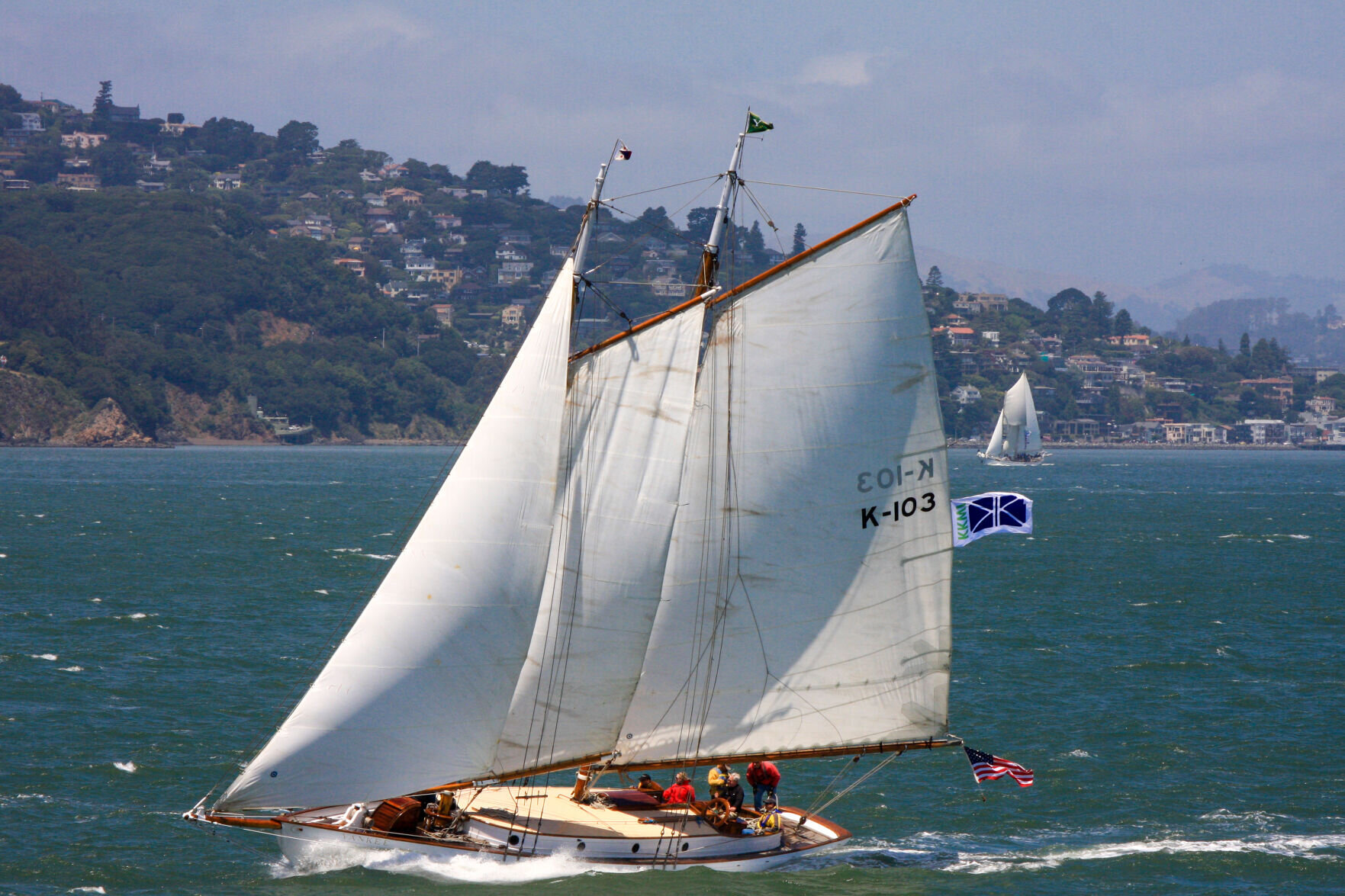
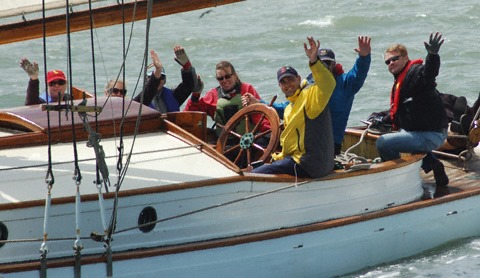
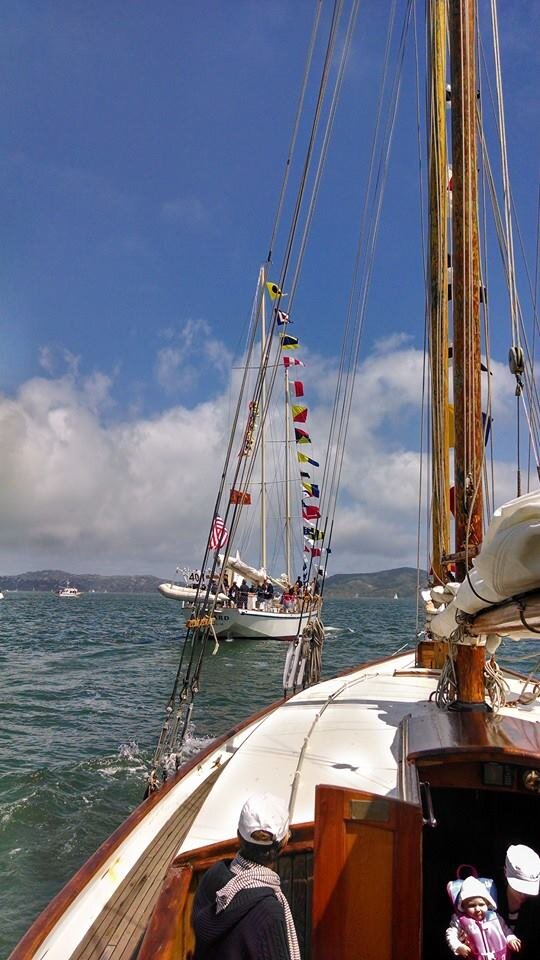
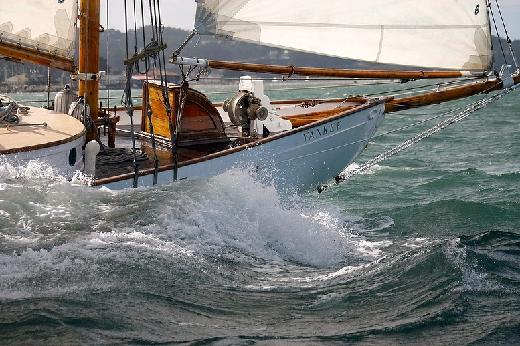
Under sail.
From the ship’s record.
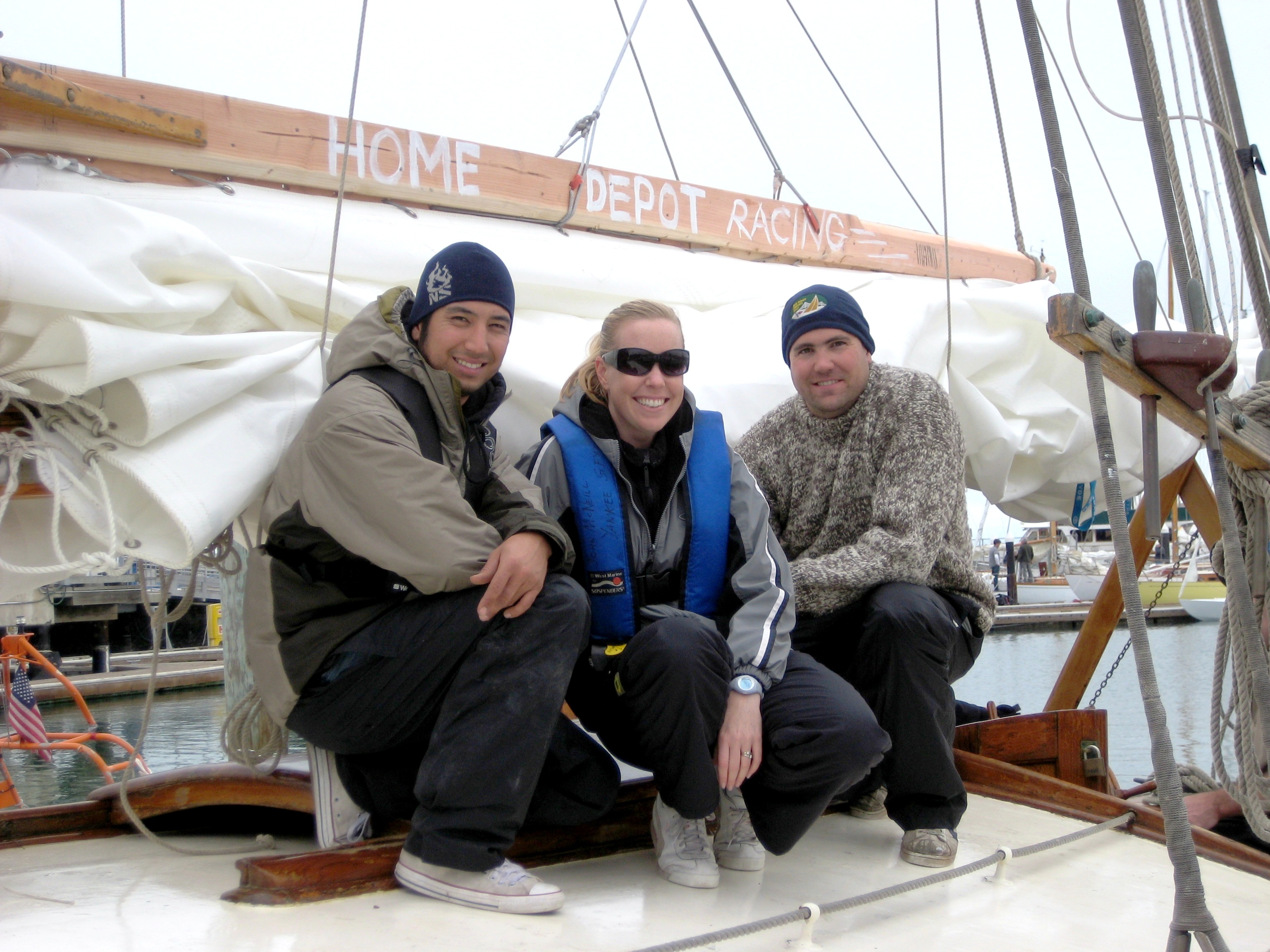 2000s · Racing
The Home Depot Racing gaff
A splintered spar, a lumber-aisle fix, and a regatta won anyway; the crew wore the sponsor name with pride.
Chapter IX →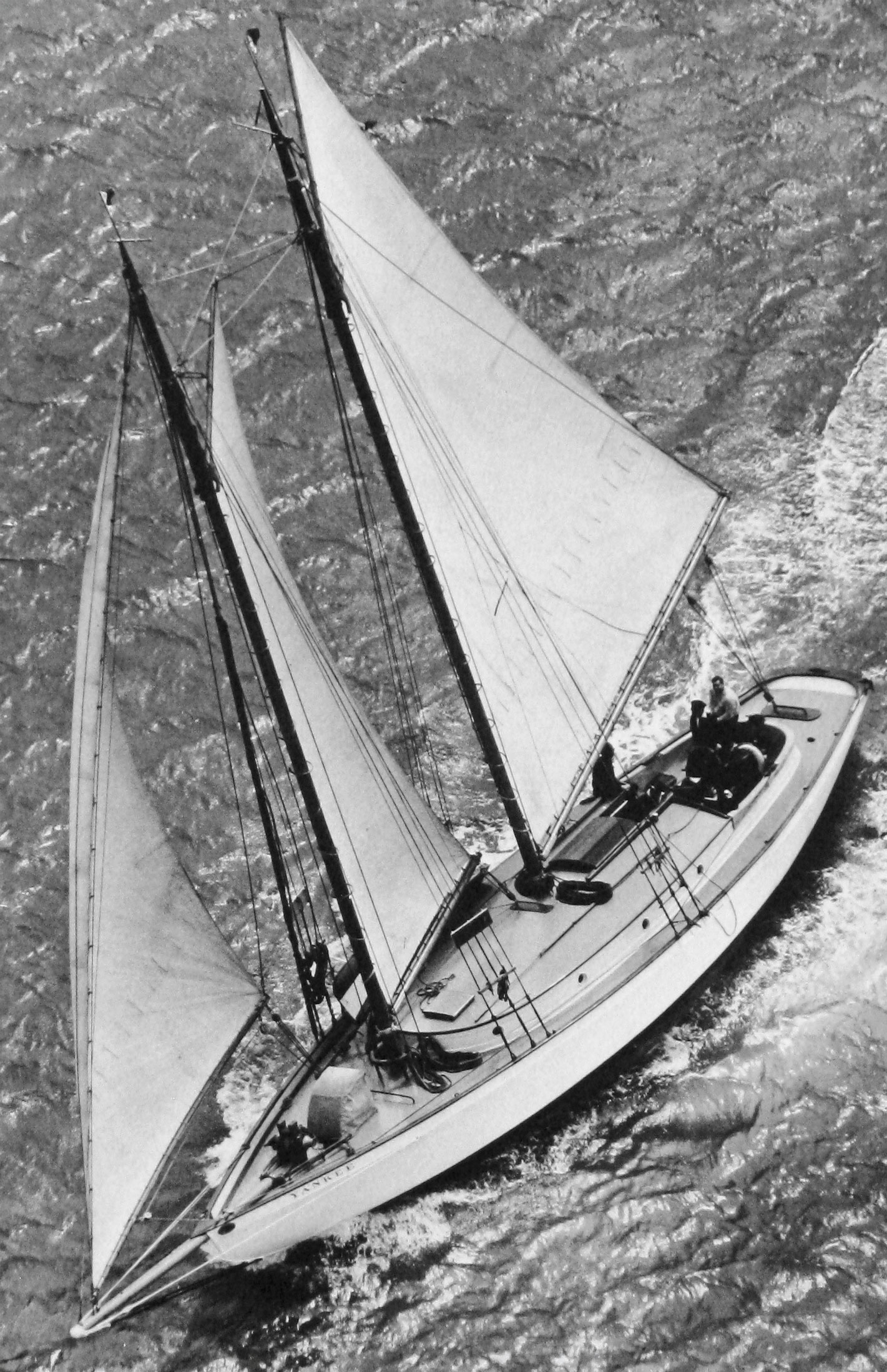 1942 · War service
Painted gray for the Golden Gate
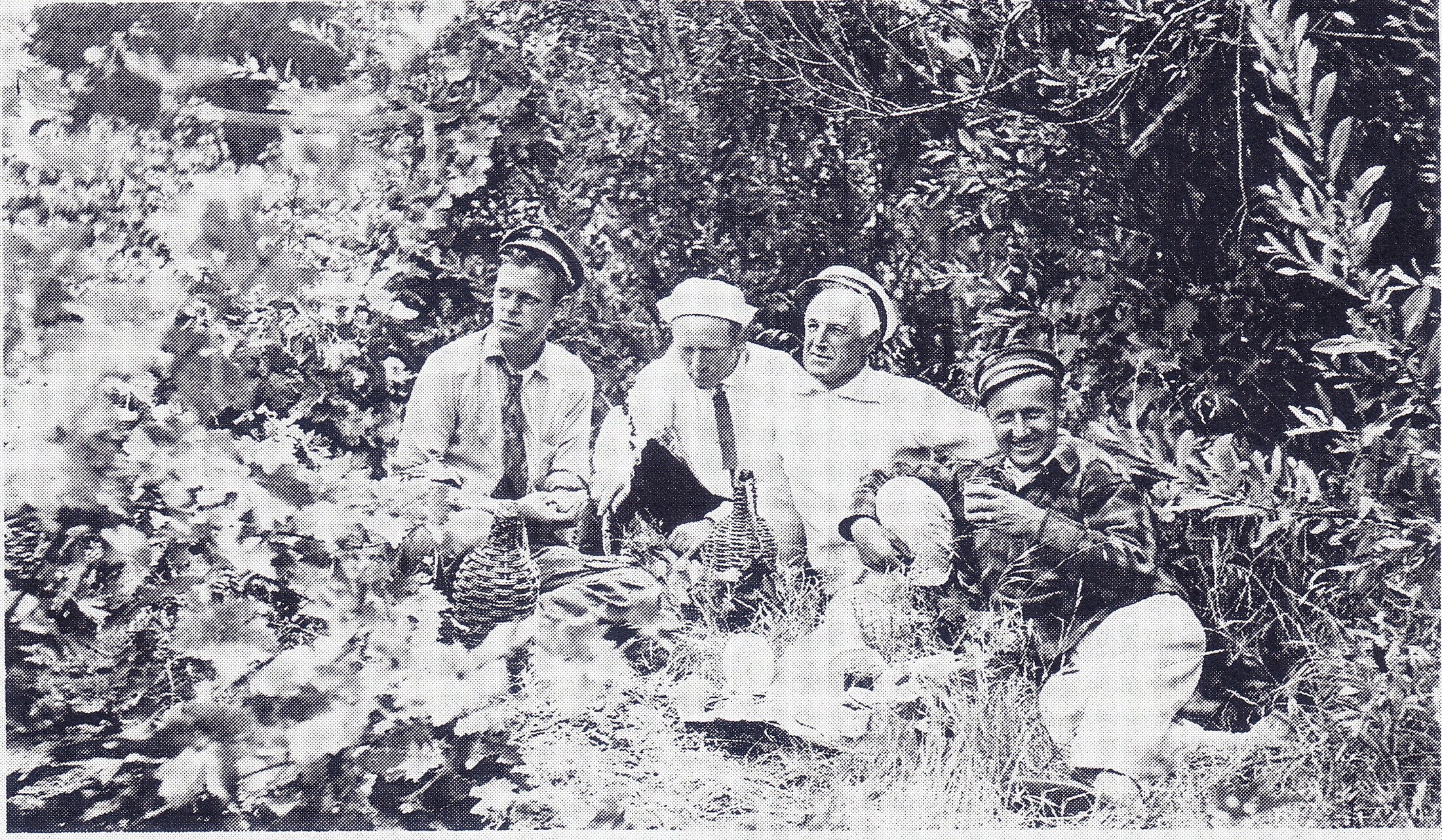
Commissioned by the U.S. Navy for coastal patrol — and the author of the most famous radio message never sent.
Chapter VI →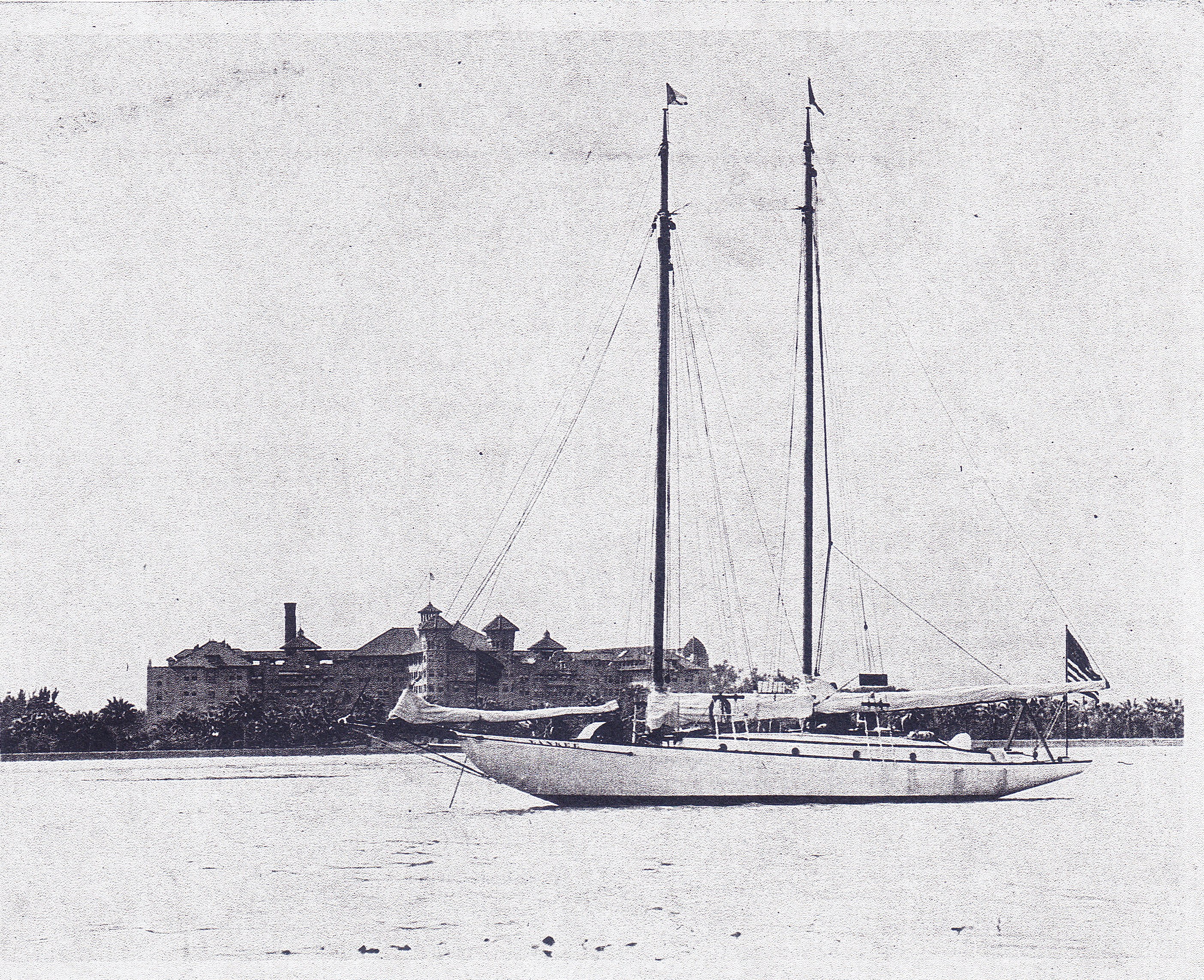 1923 & 1962 · Hollywood
Two turns on the silver screen
A starring role in a King Vidor silent film, and a cameo alongside Jack Lemmon, proven frame by frame.
Chapter X →A hundred and twenty years of vocabulary, too: the glossary keeps it, and the quiz grades you.
A short letter from the yard, weekly.
The Logbook carries the work as it happens: dated entries, photographs, plain captions. The letter brings it to you: one email a week, written from the yard, no noise.
Our list platform is being set up; for now the button sends us a note directly, and we’ll add you by hand. It works.
Experienced sailors and skilled craftspeople who want in on the work: info@schooneryankee1906.org
Funded phase by phase.
The hardest structural work is done. What remains is organized as ten phases with separate scopes and budgets; Phase 1 (haul-out, professional survey, stabilization) is funded and under way at Richardson Bay Boatworks. The survey sets the scope and price of Phase 2, and we’ll publish that number when it’s in hand. Money buys boatwright hours, materials, and berthing. Nobody takes a salary.
Many employers match gifts; search for the West Coast Seafaring Society.
A program of the West Coast Seafaring Society, a 501(c)(3) nonprofit · EIN 84-1776838